

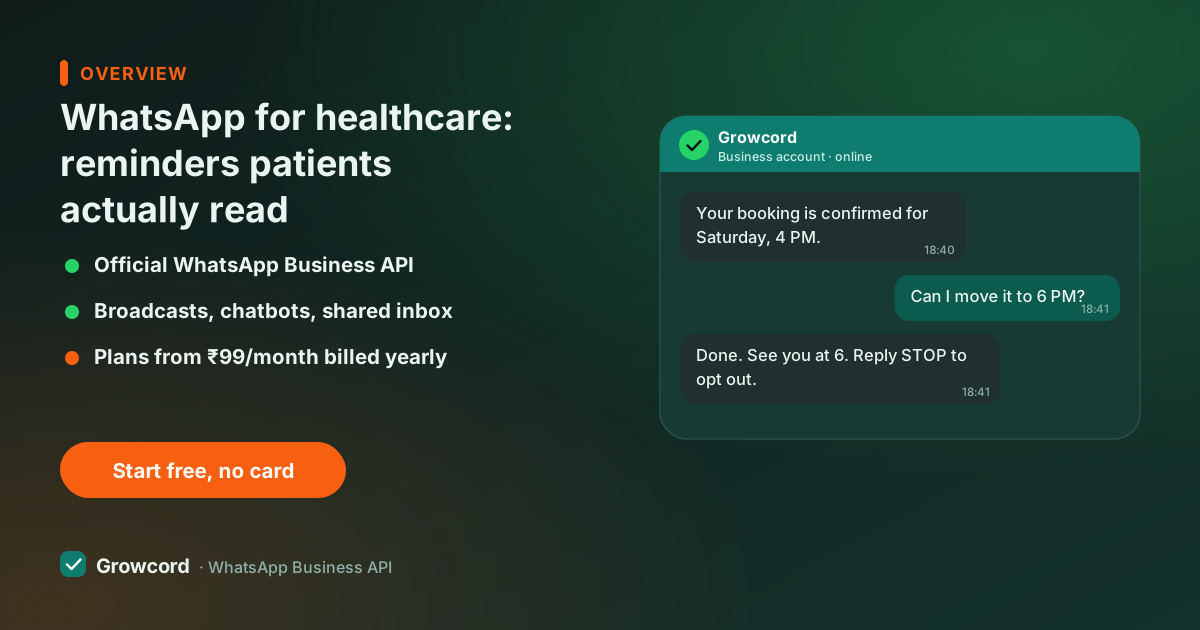
Why clinics in India are moving to WhatsApp
Walk into any busy clinic at 10 am and the front desk is doing three jobs at once: answering "is the doctor in today?" calls, chasing tomorrow's appointments, and telling someone their report is ready. Most of those calls don't need a human. They need a message, one the patient can read between meetings and act on with a tap.
Many clinics already know this and run WhatsApp from a staff member's personal number. That works until it doesn't. The chat history leaves when the employee does, nothing can be automated, two receptionists can't share the number, and forwarding the same "clinic closed on Sunday" message to 400 patients from a personal app is exactly the pattern that gets numbers banned.
The API version of WhatsApp fixes all four problems: the number belongs to the clinic, messages can be triggered automatically, the whole desk works from a shared inbox, and bulk sends are the sanctioned kind.
Patient appointment reminders that cut no-shows
The single highest-value automation for a clinic is boring: a reminder the evening before, and another two hours before the slot, each with Confirm and Reschedule buttons. A no-show costs the clinic the slot and costs the next patient a longer wait; a reminder the patient actually reads is the cheapest fix there is. SMS gets ignored and calls interrupt. WhatsApp sits in the app people check all day.
In Growcord these are appointment reminders built from approved templates with merge fields for patient name, doctor, date and time. Reminders count as utility conversations under Meta's pricing, the cheap category, a single-doctor OPD seeing 25 patients a day sends roughly 600 reminder conversations a month, which costs about ₹72 in Meta fees.
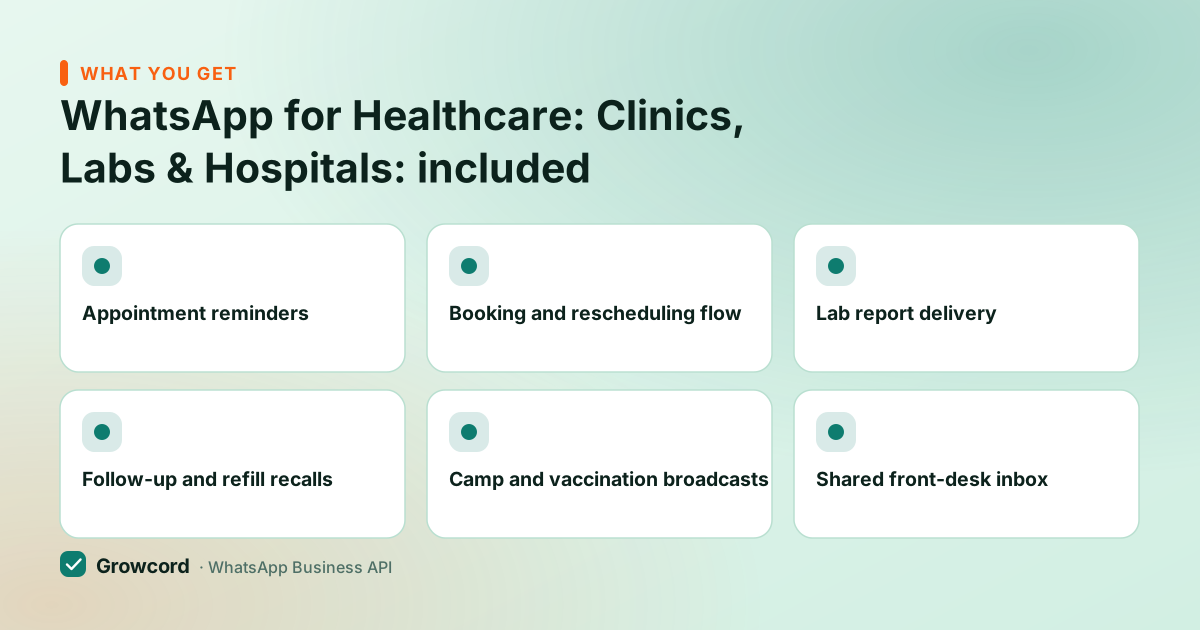
Six ways clinics and labs use Growcord
Appointment reminders
Evening-before and two-hours-before reminders with confirm and reschedule buttons, sent automatically from the appointment list.
Booking and rescheduling flow
A no-code chat flow shows departments, doctors and open slots so patients book themselves, including at 11 pm when the desk is closed.
Lab report delivery
Send the report as a PDF the moment it's approved, instead of making patients travel back or call the lab twice a day.
Follow-up and refill recalls
Post-consultation care instructions, review-visit nudges after 15 days, and refill reminders timed to the prescription cycle.
Camp and vaccination broadcasts
Announce health camps, flu-shot drives or new specialist OPD days to opted-in patients with a scheduled broadcast.
Shared front-desk inbox
Receptionists and coordinators answer from one clinic number with full history, so nothing lives on a personal phone.
Lab report delivery on WhatsApp, done carefully
Reports are where WhatsApp saves the most staff time, and where a clinic should be the most careful. Three habits keep it clean:
- Take explicit consent first. A tick-box on the registration form or a one-time "Reply YES to receive reports on WhatsApp" message. Our opt-in guide has formats that hold up.
- Keep the message text neutral. "Your report for the test dated 12 Aug is ready" with the PDF attached, no diagnosis or values in the visible text, since notification previews appear on lock screens.
- Send documents, not screenshots. A properly named PDF is easier for the patient to save and share with a treating doctor.
One policy note: Meta's commerce rules don't allow listing medicines in a WhatsApp catalog, so pharmacies should handle orders in chat rather than through a product catalog. Service communication, bookings, reminders, reports, follow-ups, is exactly what the API is built for.
Three templates a clinic can adapt
Appointment reminder: "Namaste Ritu, this is a reminder of your appointment with Dr. Mehta at Ashirvad Clinic tomorrow, Thu 14 Aug, 5:30 pm. Reply 1 to confirm or 2 to reschedule. Please carry previous prescriptions."
Report ready: "Hello Ritu, your report for the test done on 12 Aug at Ashirvad Diagnostics is ready. The PDF is attached. To book a review consultation with the doctor, reply BOOK."
Review-visit recall: "Hello Ritu, Dr. Mehta had advised a follow-up visit two weeks after your last consultation. Slots are open this week, reply BOOK to pick a time, or call us at the clinic."
Each of these goes to Meta for approval as a template message, usually a same-day process, and after a patient replies, the conversation continues freely inside the 24-hour window.
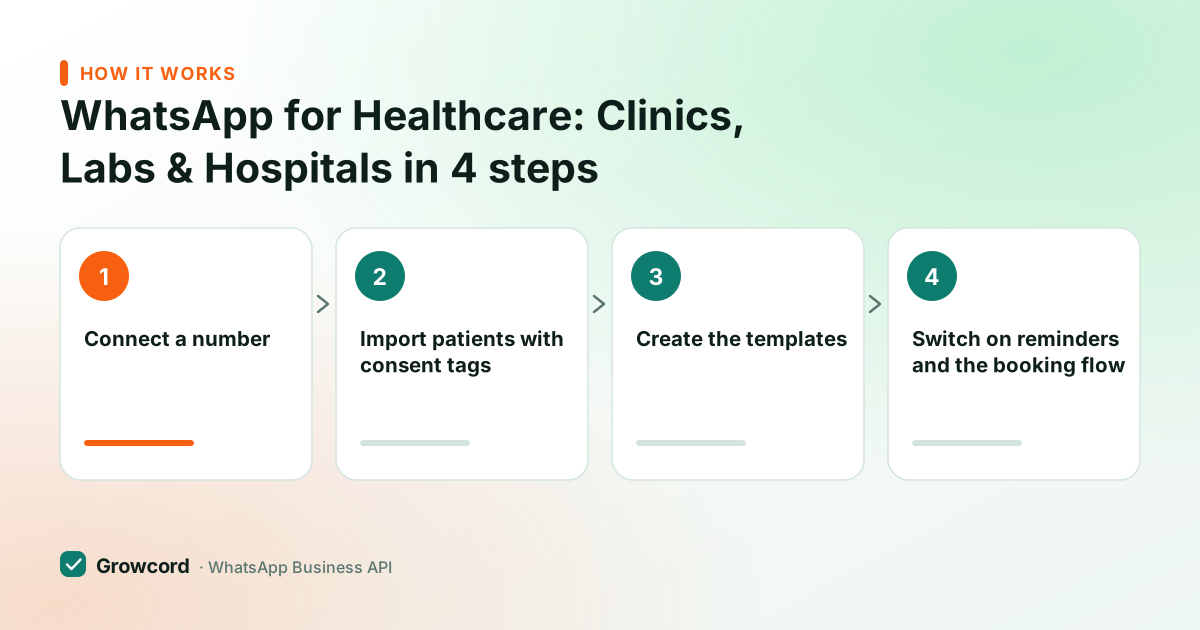
Getting a clinic live in an afternoon
Connect a number
Use a new number or move the clinic's existing one to the API. Growcord walks you through Meta's verification inside the dashboard.
Import patients with consent tags
Upload the patient list as a CSV, tagged by department, doctor or visit type. Only opted-in patients get proactive messages.
Create the templates
Write the reminder, report and recall templates with merge fields and submit them to Meta from inside Growcord.
Switch on reminders and the booking flow
Reminders trigger from your appointment data, via the dashboard, a CSV, or the API if you use clinic-management software. The booking bot handles the rest.
What it costs a small clinic
Two parts, and the first one depends on your OPD volume. Basic at ₹299/month, ₹99/month billed yearly, includes 200 conversations, which suits a part-time practice or a specialist seeing patients three days a week.
A full-time single-doctor clinic sending reminders and reports lands around 600–800 conversations a month, so Startup at ₹799/month (₹399 yearly, 1,000 included) is the honest recommendation. Extra numbers for a second branch are ₹299/month, extra staff logins ₹149/month.
The second part is Meta's. It bills per 24-hour conversation by category, and you pay its published rate exactly, Growcord adds no markup and earns on the subscription. Reminders and report messages are utility conversations at roughly ₹0.12 each in India; patient replies inside the 24-hour service window cost nothing. The conversation pricing guide explains the categories and the pricing page lists every plan.
The free tier, one number and 50 conversations a month, is enough to run reminders for a week and count the confirmations that come back. Paid plans carry a 7-day unconditional money-back guarantee on the subscription.
Put reminders and reports on autopilot this week
Free tier includes 50 conversations a month, enough to test reminders on real appointments before paying anything.
Start free, no card neededWhy Growcord
What you get here that you don't get elsewhere
Frequently asked questions
Is it okay to send lab reports on WhatsApp in India?
Yes, with the patient's consent. Take an explicit opt-in at registration, keep the message text neutral (no diagnosis or values visible in the notification), and attach the report as a PDF. The API keeps a record of what was sent from the clinic's official number, which is better governance than staff forwarding reports from personal phones.
Can patients book appointments themselves on WhatsApp?
Yes. A no-code chat flow in Growcord can show departments, doctors and available slots, take the booking, and send a confirmation, with no receptionist involved. Patients can also reschedule by tapping a button on the reminder, which is when most rescheduling actually happens.
Can I use the clinic's existing WhatsApp number?
Yes. An existing number can be migrated to the WhatsApp Business API, keeping the number patients already have saved. During migration it stops working in the phone app and starts working in Growcord's dashboard instead, the chat history from the app doesn't carry over, so export anything you need first.
How much does the WhatsApp API cost for a small clinic?
Basic is ₹299/month, or ₹99/month billed yearly, with 200 conversations included, enough for a part-time practice. A full-time single-doctor OPD sending reminders and reports needs closer to 700 conversations a month, which is Startup at ₹799/month (₹399 yearly). Meta's fees are separate and small for this traffic: utility conversations run about ₹0.12 each, so roughly ₹85 a month at that volume.
Will sending reminders get the clinic's number banned?
No. Reminders go out as Meta-approved utility templates to patients who opted in. This is the channel working as designed, not a workaround. Bans hit unofficial bulk tools and personal-app forwarding. What you should still avoid is sending promotional blasts to people who never agreed to hear from you.
Can two receptionists and a doctor use the same number?
Yes. Growcord's shared inbox lets multiple team members answer from the one clinic number, each with their own login, with the full conversation history visible to everyone. Plans include team seats and extra members can be added at ₹149/month each.
Why businesses pick Growcord
Official WhatsApp Business API
Built on Meta's Cloud API, the sanctioned channel, not a modded app. No number-ban roulette.
Indian pricing, GST invoice
Plans from ₹99/month billed yearly. Paid in ₹ via Razorpay, with a proper GST invoice every time.
Free tier, no card needed
1 number and 50 conversations a month to prove it on real customers before paying anything.
Support from New Delhi, in IST
A real team on email and WhatsApp, Monday to Saturday 10:00–19:00 IST, not a ticket void.
Talk to us
Get set up on WhatsApp this week
Tell us what you sell and how many customers you message. We'll reply on WhatsApp with the plan that fits and, if you want it, walk you through the Meta approval step.
- No sales call unless you ask for one
- Answers from the team that builds it, in IST hours
- Free tier available. You can start before you decide
Documentation and official resources
Keep reading
Related guides and comparisons
Last updated: 2026-08-07