

Seven in ten carts are abandoned, and email won't recover them
Roughly seven in ten online carts never reach payment; that is the figure cart-abandonment studies keep landing on, and Indian stores with a large COD audience often run higher.
The reasons are ordinary: the delivery charge appeared at the last step, the payment OTP failed, the customer wanted to check with someone at home, or they planned to "order tonight" and forgot. None of these people rejected your product. They stalled.
The standard fix, a recovery email, mostly goes unseen here. It lands in Gmail's Promotions tab hours later, in an inbox many shoppers open once a week. SMS gets a little further but can't show the product or reopen the cart in one tap.
WhatsApp is the app the same shopper uses for their family group, their society group and their kirana order, so a reminder that would have died in email at least gets looked at.
How WhatsApp cart recovery works with Shopify and WooCommerce
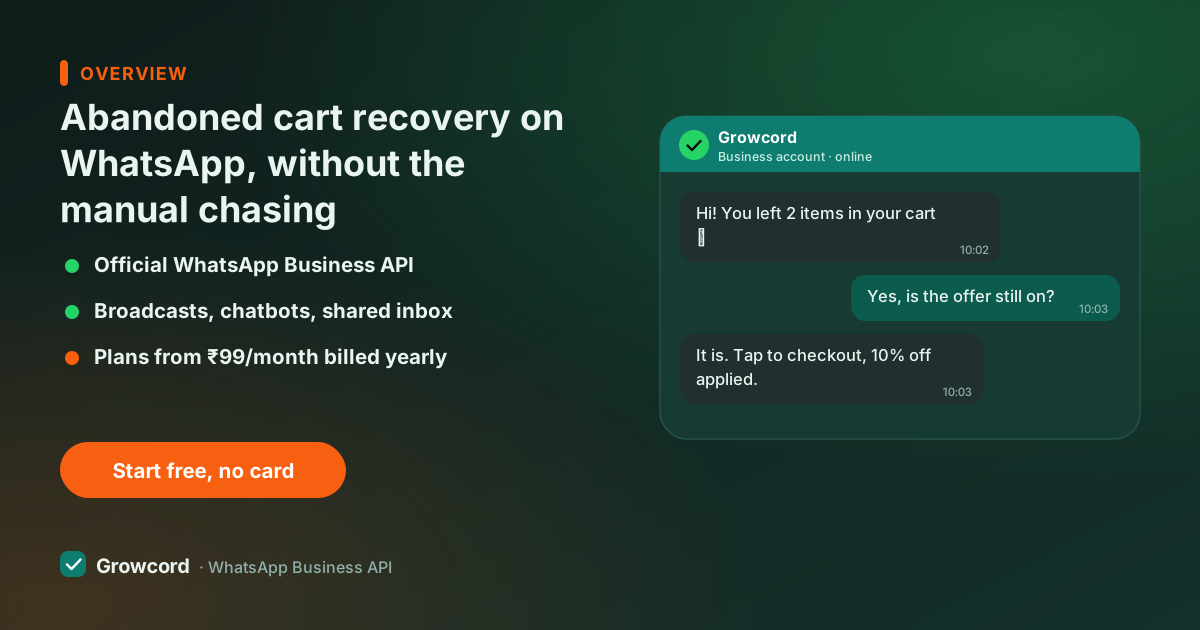
When a checkout stalls, your store fires an event. Growcord catches it, waits for the delay you set, checks the order still hasn't been placed, and sends a Meta-approved template: the customer's name, the product they left, the amount, and a button that reopens the cart.
If they reply with a question "is COD available?", "how many days for delivery?". The conversation lands in your shared team inbox or gets picked up by a no-code bot flow so the sale can actually close.
Connecting the store is a connect-and-map job, not a development project: native Shopify and WooCommerce integrations, and a webhook for custom-built stores. The standard flows need no code at all.
What the automation handles for you
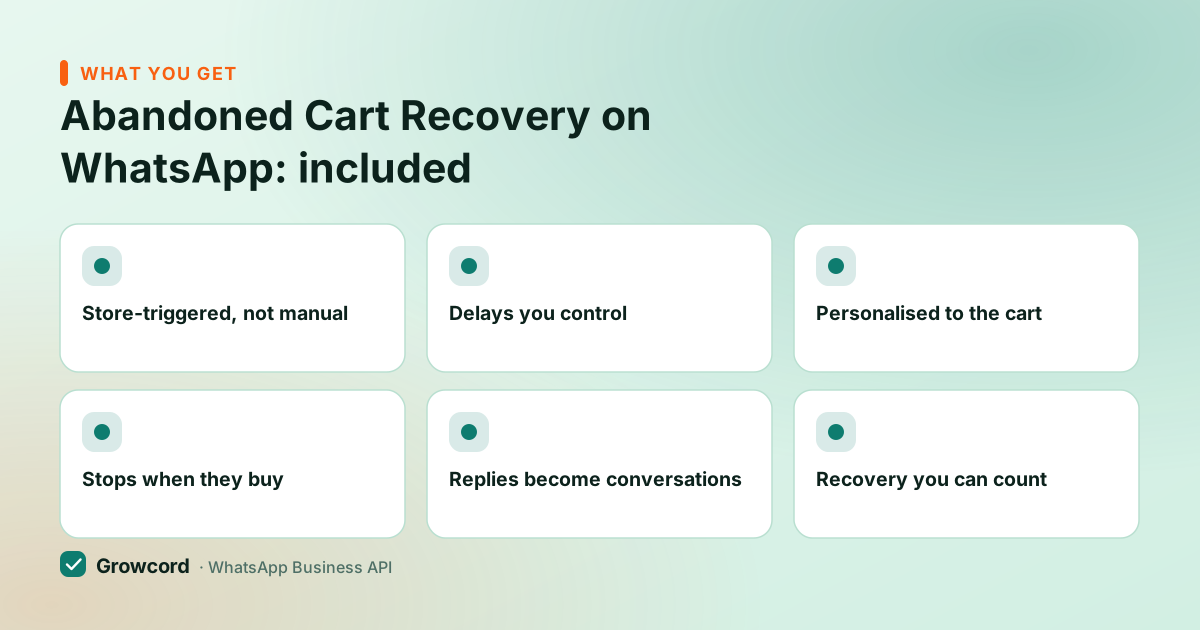
Store-triggered, not manual
Shopify and WooCommerce checkouts trigger reminders on their own; custom stores use one simple webhook.
Delays you control
Send after 30 minutes, 4 hours or next morning, whatever suits your buyer. A second nudge can follow a day later.
Personalised to the cart
Name, product, amount and cart link merge into the template, so it reads like a message, not a blast.
Stops when they buy
If the order is placed before the reminder fires, it's cancelled automatically. Nobody gets nagged about a cart they paid for.
Replies become conversations
Questions about COD, sizes or delivery land in the team inbox, where a person or a bot can close the sale.
Recovery you can count
Each reminder's delivered, read and replied numbers sit next to the orders it brought back and what it cost in credits.
Set it up once
Connect your store
Shopify and WooCommerce connect from the integrations page in a few minutes. Custom carts send abandoned-checkout events to a Growcord webhook.
Pick the delay and write the template
Write the reminder with merge fields and submit it to Meta from inside Growcord. Approval usually takes minutes to a few hours.
Set the stop rules
Skip customers who already ordered, cap the sequence at two reminders, and keep sends inside sensible hours.
Go live and read the report
Recovered orders, read rates and credit cost show per reminder, so you can tune the delay and the copy from data.
Do the arithmetic with your own numbers
We won't promise a recovery rate, nobody honestly can. So take last month's numbers from your store admin and do the sum. Say 300 checkouts were abandoned and your average order is ₹1,100. Cart reminders are marketing conversations, roughly ₹0.78–0.88 each in India, so messaging all 300 costs around ₹250 in Meta fees.
If 5% come back, that's 15 orders, about ₹16,500. If only 2% do, it's 6 orders and ₹6,600 against the same ₹250. Change the percentage to whatever you believe; the cost side of the equation stays small either way. The conversation pricing guide explains how the fees are calculated.
Writing a cart reminder message that gets tapped
The reminder that works is short and specific: the product by name, the amount, one button. "Hi Meera, your Banarasi silk saree (₹2,499) is still in your cart, tap below to finish checkout. COD available." Skip countdown-timer theatrics; if you use urgency, make it true ("3 left in stock" only when three are left).
A second reminder a day later can take a different angle, answer the objection that probably stopped them, like delivery time or COD, and if you offer a discount, save it for this second message so you're not training customers to abandon carts for coupons. Stop at two. The template examples page has formats Meta approves quickly.
What it costs
Growcord's Basic plan is ₹299/month, ₹99/month billed yearly, with 200 conversations included; the free tier (1 number, 50 conversations a month) is enough to test the flow on real carts before paying anything. Meta's per-conversation fee sits on top, billed as credits at exactly Meta's published rate.
Growcord adds no markup to it and earns on the subscription instead. Subscriptions also carry a 7-day unconditional money-back guarantee: unused credits stay in your wallet, and only conversations Meta has already delivered are non-refundable. The pricing page has every plan side by side.
For a price anchor, going by what competitors publish in August 2026: Wati's entry Growth plan lists at ₹2,499/month, AiSensy's Basic at about ₹1,500/month, and Interakt prices per conversation from ₹0.97. If cart recovery and a shared inbox are what you actually need, that is a lot of monthly fee to carry.
Turn this month's lost carts into orders
Connect Shopify or WooCommerce, approve one template, and the reminders run themselves. Free tier: 1 number, 50 conversations a month.
Start free, no card neededWhy Growcord
What you get here that you don't get elsewhere
Frequently asked questions
How do I send abandoned cart messages on WhatsApp from Shopify?
Connect the Shopify integration in Growcord, choose a delay, and pick an approved cart-reminder template. From then on, every abandoned checkout triggers a WhatsApp message with the product, the amount and a link back to the cart, no code and no manual sending. WooCommerce works the same way; custom stores use a webhook.
Will cart reminders get my WhatsApp number banned?
No. This runs on the official WhatsApp Business API with Meta-approved templates, which is the sanctioned way to message customers. What protects you in practice: message people who checked out on your own store, keep it to one or two reminders, and honour opt-outs. Ban problems come from unofficial bulk tools, not from this.
When should the cart reminder go out?
Common practice is a first reminder within the first hour, while intent is fresh, and an optional second one the next day. There's no universally right delay, a ₹500 impulse product recovers differently from a ₹15,000 considered one, so start with one hour and adjust from your own report.
What does each cart recovery message cost?
Cart reminders count as marketing conversations, roughly ₹0.78–0.88 each in India at Meta's current rates, billed as credits at exactly what Meta charges, with no Growcord markup on top. The plan fee is separate: ₹299/month, or ₹99/month billed yearly, on Basic. Growcord shows the estimated credit cost before an automation goes live, so 300 abandoned carts reads as about ₹250 before you switch it on.
Can I offer a discount in the cart reminder?
Yes, and the common tactic is to hold it back: the first reminder is a plain nudge, and the follow-up a day later adds a small code if the order still hasn't come. Leading with discounts teaches regulars to abandon carts on purpose, so most stores keep the coupon for message two.
Do customers have to opt in before I can message them?
Yes. Meta's rules require consent, and the standard pattern is a checkbox or notice at checkout saying order and cart updates will arrive on WhatsApp. Since the shopper typed their number into your checkout themselves, this is straightforward, the opt-in guide has wording that holds up.
Why businesses pick Growcord
Official WhatsApp Business API
Built on Meta's Cloud API, the sanctioned channel, not a modded app. No number-ban roulette.
Indian pricing, GST invoice
Plans from ₹99/month billed yearly. Paid in ₹ via Razorpay, with a proper GST invoice every time.
Free tier, no card needed
1 number and 50 conversations a month to prove it on real customers before paying anything.
Support from New Delhi, in IST
A real team on email and WhatsApp, Monday to Saturday 10:00–19:00 IST, not a ticket void.
Talk to us
Get set up on WhatsApp this week
Tell us what you sell and how many customers you message. We'll reply on WhatsApp with the plan that fits and, if you want it, walk you through the Meta approval step.
- No sales call unless you ask for one
- Answers from the team that builds it, in IST hours
- Free tier available. You can start before you decide
Keep reading
Related guides and comparisons
Last updated: 2026-08-07