

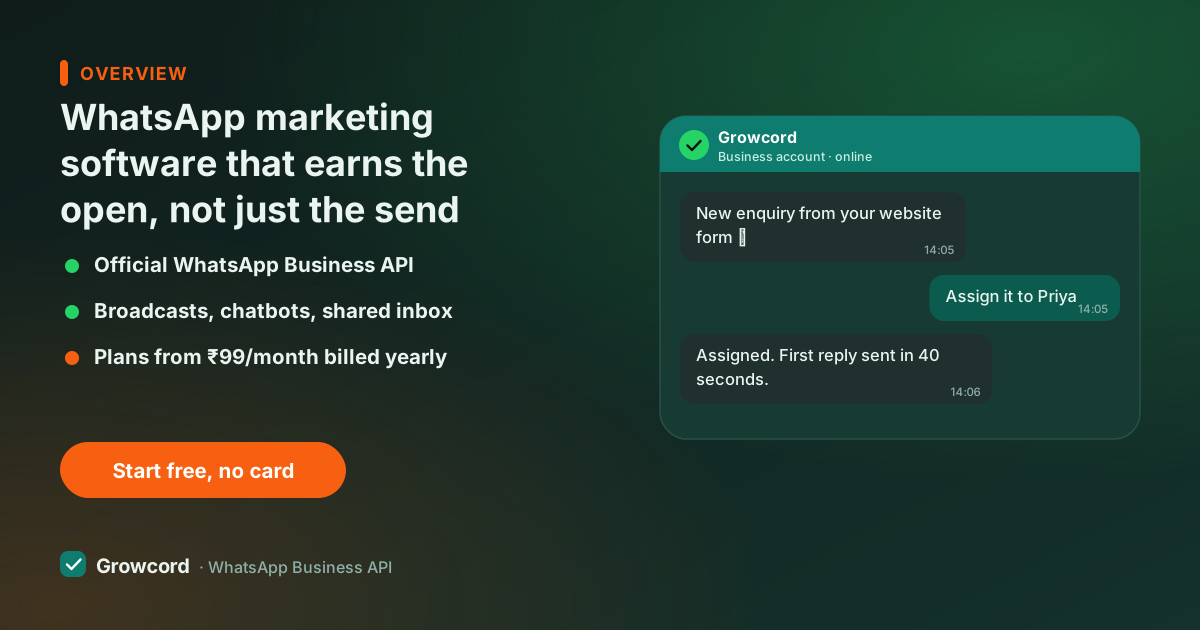
Why marketing teams in India keep moving budget to WhatsApp
The channel maths is hard to argue with. WhatsApp read rates are commonly reported around 90%+ within minutes, against email open rates that typically sit in the twenties and SMS that arrives into an inbox nobody checks for anything but OTPs.
More importantly, WhatsApp is where Indian customers already reply. A campaign is the start of a conversation, not a one-way blast. The WhatsApp vs SMS vs email comparison puts the channel numbers side by side.
But the channel only works through the front door. Marketing messages on the API are Meta-approved templates sent to opted-in contacts, that's what keeps deliverability high and your number safe. Software that promises unlimited promotion by automating the normal WhatsApp app gets numbers banned routinely; the safe bulk messaging page explains why. Good marketing software makes the compliant path the easy path.
What separates marketing software from a bulk sender
A bulk sender fires one message at one list. Marketing software runs the whole loop: it keeps the list clean and segmented, personalises each send, schedules around your customer's day, catches the replies with a bot or an inbox, and tells you which campaign made money. That last part matters most, without per-campaign reports next to costs, WhatsApp marketing is a feeling, not a channel.
The marketing toolkit in Growcord
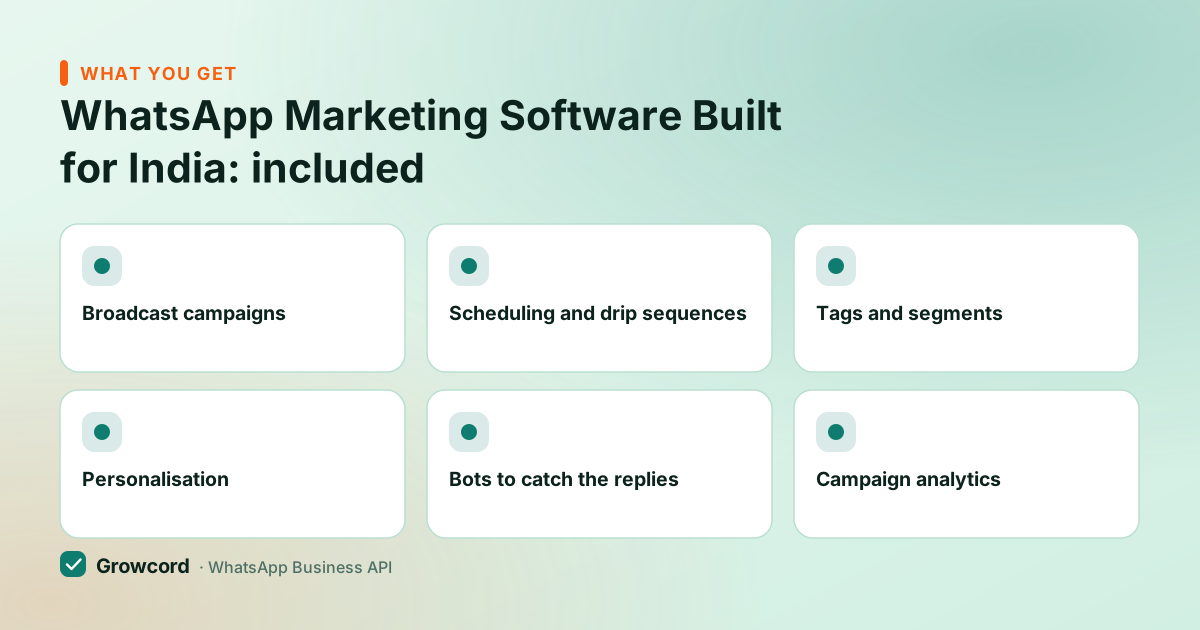
Broadcast campaigns
Approved templates to your full opted-in list or a segment, no 256-contact cap, with delivery and read counts per send.
Scheduling and drip sequences
Queue the Diwali campaign for Sunday 11 am, or set a welcome series that sends itself over days.
Tags and segments
Repeat buyers, lapsed customers, COD-only, city-wise, target the message to the people it fits.
Personalisation
Merge name, order details, due amounts or any contact field into the template, per recipient.
Bots to catch the replies
When a campaign lands, replies flow into no-code bot flows or the shared inbox. The sale happens in the follow-up.
Campaign analytics
Delivered, read, replied, per campaign, next to what it cost in credits. Kill what doesn't work.
Your first campaign, start to report
Import and tag your opted-in list
Upload a CSV or sync contacts from Shopify or WooCommerce. Tags applied on import become your segments.
Write the template and get it approved
Draft the message with merge fields and submit to Meta from inside Growcord. Approval usually takes minutes to a few hours.
Pick the segment, schedule the send
Choose tags, set the time, and review the estimated credit cost before confirming, no surprise bills.
Work the replies
Responses land in the shared inbox or a bot flow. This is where broadcasts turn into orders, so route them somewhere someone answers.
What WhatsApp marketing software costs
Two lines on the bill. Growcord's plan fee starts at ₹299/month, ₹99/month billed yearly, on Basic with 2,000 campaign messages a month; Startup at ₹799/month (₹399 yearly) adds scheduling, chatbots, analytics and a 3-person inbox with 10,000 campaign messages.
On top, Meta charges roughly ₹0.78–0.88 per marketing conversation in India, you pay Meta's published rate exactly, with nothing added. The pricing page has every plan and a set of worked examples, and the first paid month carries an unconditional 7-day money-back guarantee.
For scale, checked August 2026: Wati's Growth plan is listed at ₹2,499/month and AiSensy's Basic at around ₹1,500/month, both plus the same Meta fees. On a list of 3,000 contacts, a monthly campaign costs about ₹2,550 in Meta fees, the platform fee shouldn't be the line that dwarfs it.
Marketing that keeps working after the campaign
The highest-return sends in most accounts aren't blasts at all, they're the automated ones. Abandoned-cart recovery, back-in-stock alerts, reorder reminders and review requests each go to one customer at exactly the right moment, which is why they convert far better than any festival broadcast.
Growcord ships these as ready e-commerce automations, so the campaign calendar and the always-on layer run from the same place. For campaign ideas that fit Indian retail rhythms, the marketing ideas guide has concrete examples.
Run your first WhatsApp campaign this week
Start free, 1 number, 50 conversations a month, then launch campaigns from ₹99/month billed yearly.
Start free, no card neededWhy Growcord
What you get here that you don't get elsewhere
Frequently asked questions
What is WhatsApp marketing software?
It's software that sends promotional and lifecycle messages to your opted-in customers through the official WhatsApp Business API, broadcasts, scheduled campaigns, drip sequences and automated triggers like cart recovery, with segmentation, personalisation and delivery reports. It differs from the free Business app, which caps broadcast lists at 256 saved contacts and offers no reporting.
Is WhatsApp marketing legal in India?
Yes, when you message people who opted in. Meta's commerce and business policies require consent for marketing templates, and blocks from unconsenting recipients damage your number's quality rating. Unlike SMS, WhatsApp doesn't run through TRAI's DLT system, but the practical rule is the same: permission first. The opt-in guide covers checkout checkboxes, keyword replies and QR consent.
How much does WhatsApp marketing software cost in India?
On Growcord, plans start at ₹299/month, ₹99/month billed yearly, and Meta adds roughly ₹0.78–0.88 per marketing conversation at its published rate. So a 1,000-contact monthly campaign runs roughly ₹950–₹1,300 all-in on the entry plans. As listed in August 2026, Wati's Growth plan is ₹2,499/month and AiSensy's Basic about ₹1,500/month, before the same Meta fees.
Can I send promotional messages to people who never opted in?
You shouldn't, and it backfires quickly. Recipients who never asked to hear from you block and report, your quality rating falls, and Meta can freeze or reduce your messaging tier. Build the list through checkout consent, keyword replies, QR codes and click-to-chat links instead, slower, but it's the list that actually buys.
Does WhatsApp marketing work for small businesses?
Yes, arguably better than for anyone else, because small lists are cheap to message and personal replies are the whole advantage. A boutique with 800 opted-in customers spends under ₹800 in Meta fees on a full-list campaign, and every reply lands with someone who can close the sale. The free tier lets you prove it on a small segment first.
What's the difference between WhatsApp marketing software and a bulk WhatsApp sender?
A bulk sender only pushes messages out; marketing software manages the list, segments it, schedules and personalises sends, catches replies with bots or an inbox, and reports results per campaign. Unofficial bulk senders also carry ban risk, while API-based marketing software is the channel Meta built for this.
Why businesses pick Growcord
Official WhatsApp Business API
Built on Meta's Cloud API, the sanctioned channel, not a modded app. No number-ban roulette.
Indian pricing, GST invoice
Plans from ₹99/month billed yearly. Paid in ₹ via Razorpay, with a proper GST invoice every time.
Free tier, no card needed
1 number and 50 conversations a month to prove it on real customers before paying anything.
Support from New Delhi, in IST
A real team on email and WhatsApp, Monday to Saturday 10:00–19:00 IST, not a ticket void.
Talk to us
Get set up on WhatsApp this week
Tell us what you sell and how many customers you message. We'll reply on WhatsApp with the plan that fits and, if you want it, walk you through the Meta approval step.
- No sales call unless you ask for one
- Answers from the team that builds it, in IST hours
- Free tier available. You can start before you decide
Keep reading
Related guides and comparisons
Last updated: 2026-08-07