

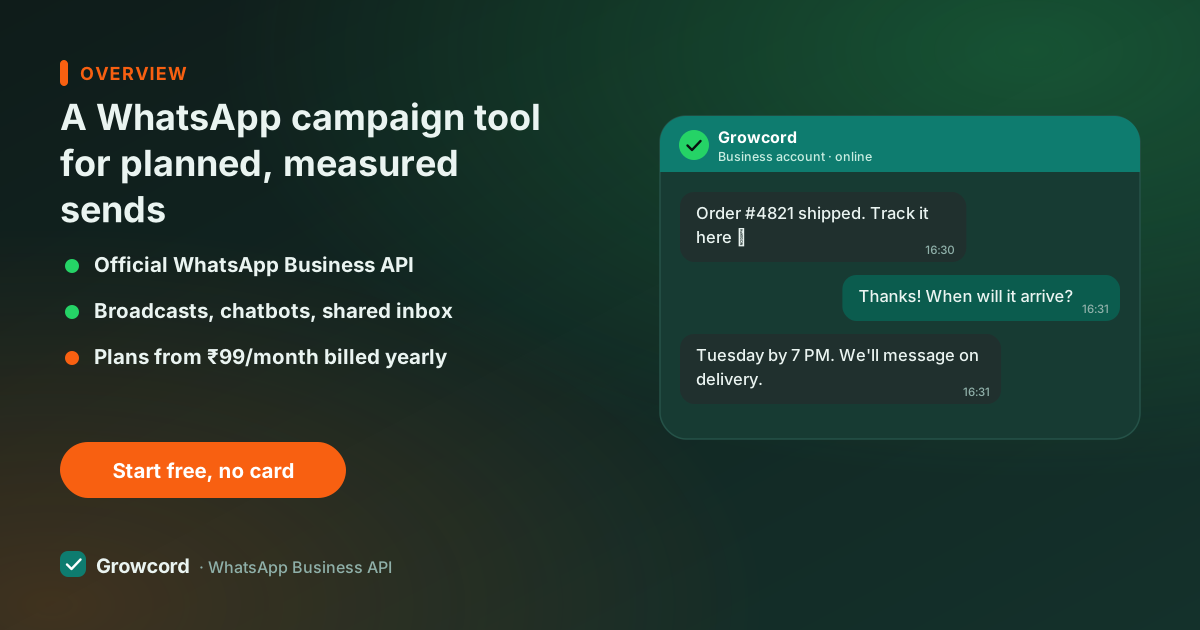
Campaign software vs a plain broadcast button
A broadcast is one send. A campaign is a practice. WhatsApp marketing campaign software earns the name when it gives you three things a send button doesn't:
- segments, so the Diwali offer goes to gold-jewellery enquirers and not to the customer who complained last week
- a calendar, so the pre-festival sequence is queued in July instead of typed in a panic the night before
- reports side by side, so you can see that the restock alert out-performed the discount blast and do more of what worked
The mechanics of a single send, templates, tiers, opt-ins, are covered on the broadcast software page. This page is about the layer on top: planning, sequencing and measuring.
Scheduled WhatsApp campaigns that send themselves
Timing on WhatsApp is unforgiving in a way email never was, a message at 11:40 pm is a notification on a personal phone at 11:40 pm. Scheduling fixes both halves of the problem: the campaign goes out when your customers actually read (test it, a kirana's morning and a D2C brand's evening are different), and it goes out even when you're busy running the business.
For Indian retail the calendar writes itself: Raksha Bandhan, Navratri, Diwali, wedding season, end-of-season sales. Queue the teaser, the offer and the last-day reminder as three separate scheduled campaigns to the same segment, and the whole festival push runs without a late night. The marketing ideas page has worked examples for each season.
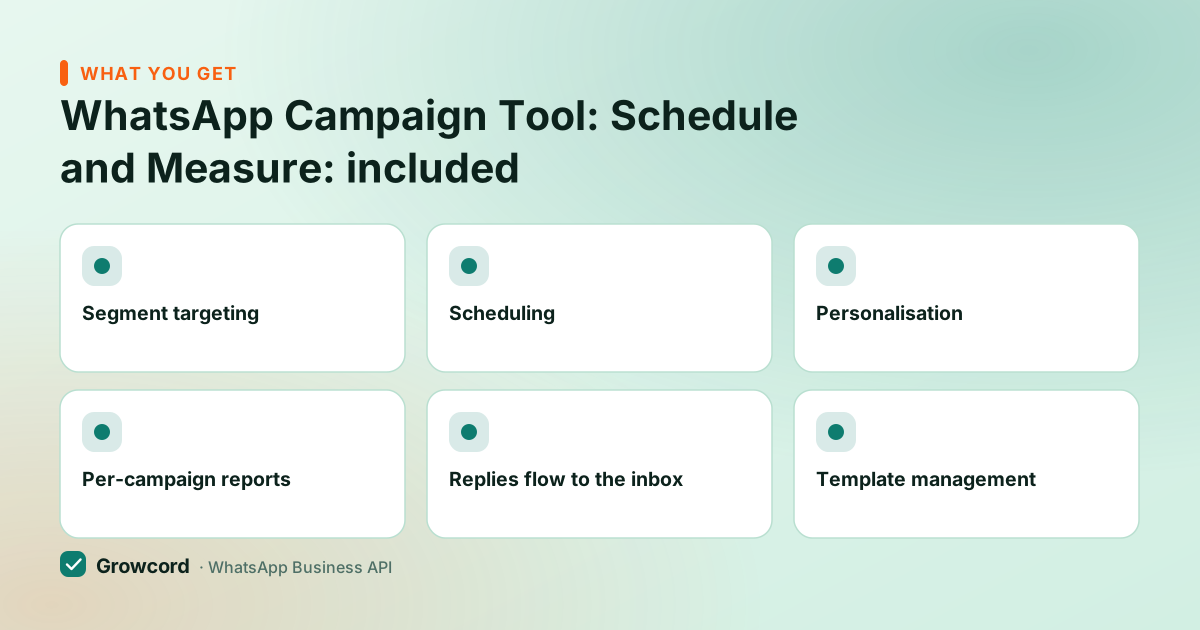
What a Growcord campaign includes
Segment targeting
Send to tags and segments, repeat buyers, cold leads, one city, never a blind blast to the whole list.
Scheduling
Set the date and time; the campaign sends on schedule with no one logged in.
Personalisation
Merge any contact field into the template, name, order number, due amount, city.
Per-campaign reports
Delivered, read and replied counts for every campaign, next to what it cost in credits.
Replies flow to the inbox
Answers land in the shared team inbox, or a bot flow qualifies them before a human steps in.
Template management
Create and submit templates to Meta from the same screen, with approval status synced back.
How a campaign comes together
Pick or create the template
Write the message with merge fields and submit it for Meta approval from inside Growcord, usually minutes to a few hours.
Choose the segment
Select tags or a saved segment. The audience count and the estimated credit cost show before you commit.
Schedule it
Now, tonight, or three weeks before Diwali. Queue several campaigns as a sequence if you're running a festival push.
Read the report, then iterate
Delivery and read counts update live; replies hit the inbox. Compare campaigns and let the numbers pick your next move.
Building a WhatsApp drip campaign
A drip campaign is a timed sequence rather than a single send: message one on day zero, a follow-up on day two, a final nudge on day five, with the sequence stopping the moment the person replies or opts out.
Drips fit anywhere a decision takes days: a coaching institute nurturing admission enquiries, a D2C brand winning back customers who haven't ordered in 90 days, a travel agency following up quote requests.
Two honest constraints. Outside the 24-hour service window every drip message is an approved template to an opted-in contact, and each marketing send is a paid conversation, so a seven-message drip costs seven times what one good message does and irritates people six extra times. Short sequences with something useful in each step outperform long ones. The drip campaigns page covers sequence design, and the opt-in guide covers consent that holds up.
What campaigns cost
Two parts, both visible before you press send. Growcord's plan fee starts at ₹299/month, ₹99/month billed yearly, with campaigns, scheduling and reports included on every plan. Meta then charges per conversation by category; a marketing conversation in India is commonly around ₹0.78–0.88.
So a 1,000-contact campaign runs roughly ₹850 in Meta fees, billed as credits at Meta's published rate with zero markup from us, and the estimate shows before you confirm. Extra conversation blocks are ₹399 per 1,000 if you outgrow your plan's allowance. Every plan and add-on sits on the pricing page, along with the 7-day money-back guarantee that covers the subscription if the first month's campaigns don't earn it back.
Plan your first campaign calendar
Free tier includes 50 conversations a month, run a real campaign to a small segment and read the report before paying anything.
Start free, no card neededWhy Growcord
What you get here that you don't get elsewhere
Frequently asked questions
Is it legal to send WhatsApp marketing campaigns in India?
Yes, when you use the official WhatsApp Business API, send Meta-approved templates, and message only people who opted in to hear from you. What's against WhatsApp's terms is bulk messaging through unofficial tools or to purchased lists, that route gets numbers banned. Consent plus the official channel keeps campaigns compliant.
Can I schedule a WhatsApp campaign in advance?
Yes. Pick any future date and time when you create the campaign and it sends itself. No one needs to be logged in. You can queue several campaigns at once, which is how festival sequences like a teaser, an offer and a last-day reminder get planned in one sitting.
How many campaigns can I send per month?
There's no campaign limit in Growcord. Your practical ceilings are Meta's messaging tier, 1,000 unique customers a day for new numbers, growing automatically with good quality, and your conversation credits. The real limit worth respecting is your audience's patience: two to four useful campaigns a month wears far better than daily blasts.
What is a WhatsApp drip campaign?
A drip campaign is an automated sequence of messages spaced over days, for example a welcome on day zero, a follow-up on day two and a final offer on day five. That stops as soon as the contact replies or opts out. It suits admission enquiries, quote follow-ups and winback flows where decisions take time.
How do I know if a campaign actually worked?
Start with the report: delivered, read and replied counts per campaign, next to its credit cost. Replies are the strongest signal on WhatsApp, a campaign that starts conversations is working. For sales attribution, watch orders from the targeted segment in your store after the send, and compare campaigns against each other rather than against a guess.
What is the best time to send a WhatsApp campaign?
There's no universal best time, a grocery store's audience reads in the morning, a fashion brand's at night. The honest method is to test: schedule the same campaign type at two different times for two segments and compare read rates. Avoid late-night sends; WhatsApp is a personal channel and a midnight promo invites blocks.
Why businesses pick Growcord
Official WhatsApp Business API
Built on Meta's Cloud API, the sanctioned channel, not a modded app. No number-ban roulette.
Indian pricing, GST invoice
Plans from ₹99/month billed yearly. Paid in ₹ via Razorpay, with a proper GST invoice every time.
Free tier, no card needed
1 number and 50 conversations a month to prove it on real customers before paying anything.
Support from New Delhi, in IST
A real team on email and WhatsApp, Monday to Saturday 10:00–19:00 IST, not a ticket void.
Talk to us
Get set up on WhatsApp this week
Tell us what you sell and how many customers you message. We'll reply on WhatsApp with the plan that fits and, if you want it, walk you through the Meta approval step.
- No sales call unless you ask for one
- Answers from the team that builds it, in IST hours
- Free tier available. You can start before you decide
Keep reading
Related guides and comparisons
Last updated: 2026-08-07