

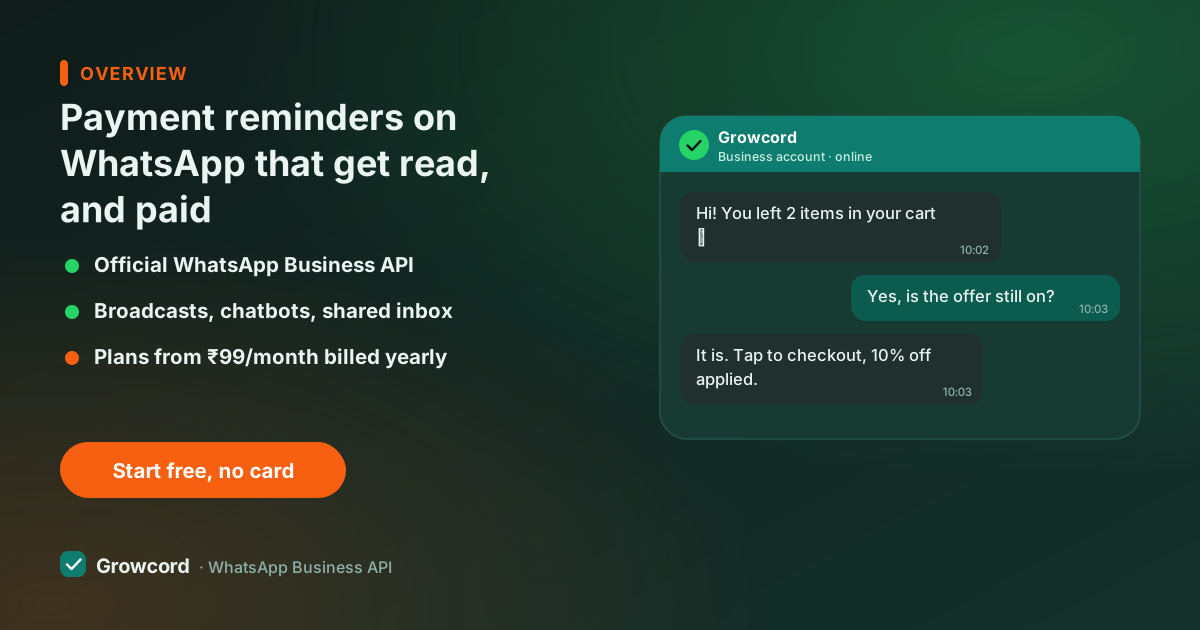
Chasing payments is a job nobody applied for
Most pending payments aren't disputes. The customer agreed to the amount; it just isn't top of mind. So someone on your team spends afternoons on the phone, the coaching institute chasing this month's fees, the NBFC collections desk working an EMI list, the distributor reminding retailers about last month's invoice, the freelancer nudging a client for the third time.
Calls get cut, SMS sits unread next to bank spam, and email was archived on arrival. Meanwhile the relationship gets a little more awkward with every call.
The awkwardness is the real cost. People delay chasing because it feels like begging, and every day of delay makes the money harder to collect.
What an automated invoice and EMI reminder flow looks like
On the WhatsApp Business API, a payment reminder is a utility template, a message format you write once, Meta approves, and Growcord fills per customer with merge fields: name, amount, what it's for, due date, and a payment link.
Because it's about money the customer already owes, it belongs to Meta's utility category, which is billed at a fraction of the marketing rate. One caution: keep offers and promotion out of the text, Meta reclassifies templates with promotional content as marketing and bills them at the higher rate.
A sequence beats a single message. Send a heads-up before the due date, the actual reminder on the day, and a polite follow-up after, and stop the moment payment is recorded.
Anyone who replies lands in the shared team inbox, so "can I pay next week?" becomes a conversation instead of a missed call. The same flow works as a fee reminder for a batch of 400 students or an invoice reminder for a dozen B2B accounts.
Where businesses use WhatsApp payment reminders
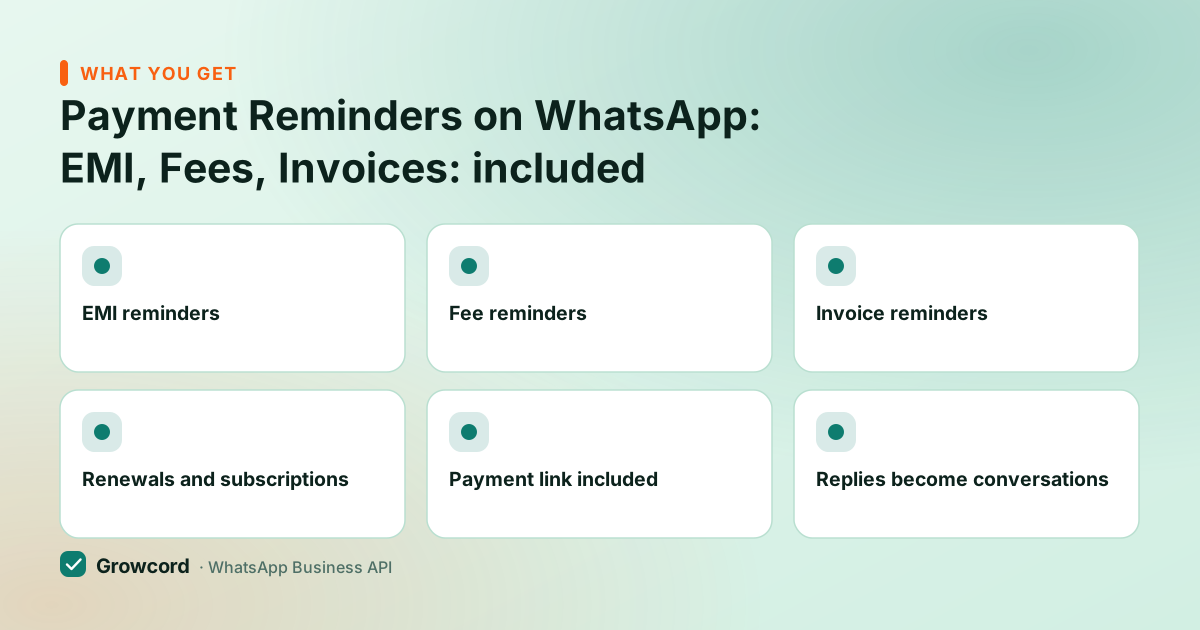
EMI reminders
NBFCs, gold-loan desks and appliance financers remind borrowers before the instalment date, with the loan reference and a link to pay.
Fee reminders
Schools, coaching institutes and gyms remind parents and members about monthly or term fees, batch by batch.
Invoice reminders
Wholesalers, agencies and freelancers chase B2B invoices with the invoice number and amount, politely, on schedule.
Renewals and subscriptions
AMCs, insurance premiums, hosting and memberships, remind before expiry so the lapse never happens.
Payment link included
Merge a Razorpay, gateway or UPI link into the message so paying takes a tap, not a bank-details hunt.
Replies become conversations
Questions and promise-to-pay replies land in the team inbox with the full context attached.
A reminder sequence that stays polite
| When it sends | What it says | Why this timing |
|---|---|---|
3 days before due date | Heads-up with amount, what it's for, and the date | Payment gets planned instead of missed |
On the due date | Amount due today, plus the payment link | The link arrives at the exact moment it's needed |
3 days overdue | Polite note that the payment is pending | Catches the genuine forgetters without drama |
7–10 days overdue | Firmer note per your policy, late fee, or a request to call | Escalation happens on schedule, not on mood |
A common pattern; adjust timings to your billing cycle. Everyone who pays drops out of the remaining steps automatically.
How it works in Growcord
Load contacts with amounts and due dates
Upload a CSV or push from your billing software via the REST API. Amount, due date and reference become merge fields.
Create the utility template
Write the reminder with merge fields and submit it to Meta from inside Growcord. Approval usually takes minutes to a few hours.
Set the triggers
Use scheduled campaigns for monthly cycles like fees and EMIs, or fire per-invoice reminders from your own system through the API, webhooks or Zapier.
Track replies and stop on payment
Replies land in the shared inbox. Mark a customer paid, manually or via API, and the rest of their sequence is cancelled.
The arithmetic for a 400-student coaching institute
Say fees are due on the 10th of every month and about a quarter of parents usually need chasing. A three-message sequence means at most 1,200 utility messages a month, in practice far fewer, because everyone who pays after message one never receives messages two and three.
At roughly ₹0.12–0.13 per utility message in India (checked August 2026), the whole month of reminders costs in the region of ₹150 in Meta fees.
Put that against the current method: if the office staff calls 100 defaulting parents and each call plus retry takes five minutes, that's over eight hours of staff time, every month, spent on the least pleasant job in the building.
We won't promise what fraction of parents pays without a call. That depends on your parents, not on us, but the experiment costs a few hundred rupees to run, and your campaign report shows the answer within one billing cycle.
What payment reminders cost on Growcord
The plan fee starts at ₹299/month, ₹99/month billed yearly, on Basic, which includes 200 conversations a month; Startup at ₹799/month (₹399 yearly) covers 1,000. Meta's per-message fees are billed as credits at cost with zero markup, and the estimate is shown before any send.
The subscription itself carries a 7-day unconditional money-back guarantee, and credits you haven't spent stay in the wallet. Reminders being utility messages, they sit in the cheapest category, the conversation pricing guide explains the categories, and the pricing page lists every plan. If you also want the payment itself to happen in the chat, see collecting payments on WhatsApp; for the wider finance use case, there's a dedicated page on WhatsApp for financial services.
Stop calling. Start reminding.
The free tier includes 50 conversations a month, enough to run one real billing cycle before paying anything.
Start free, no card neededWhy Growcord
What you get here that you don't get elsewhere
Frequently asked questions
Is it legal to send payment reminders on WhatsApp?
Yes, sending payment reminders to your own customers is allowed, provided they've opted in to hear from you on WhatsApp and the message uses a Meta-approved template. A reminder about money genuinely owed is a utility message, not marketing, and the DLT rules that complicate promotional SMS in India don't apply to WhatsApp. Keep an opt-out path and honour it; that protects your number's quality rating.
What should a payment reminder message say?
Keep it short and specific: the customer's name, the amount, what it's for (invoice number, loan account, course name), the due date, and a payment link. For example: "Hi Asha, the August fee of ₹4,500 for Class 10 Maths is due on 10 Aug. Pay here: [link]. Reply if you have a question." Skip discounts and promotion, that gets the template reclassified as marketing and billed at the higher rate.
How do I automate EMI reminders on WhatsApp?
Load borrowers with amount and due date via CSV or the REST API, create an approved EMI reminder template with merge fields, and schedule the sequence, say 3 days before, on the due date, and 3 days after. For per-account triggers from your loan management software, use webhooks or the API. Anyone marked paid drops out of the remaining reminders automatically.
Can I add a payment link to the reminder?
Yes. Create a link in Razorpay or any gateway, or use a plain UPI link, and merge it into the template as a button or in the text, so each customer gets their own amount and link. The customer taps, pays by UPI or card, and your gateway records the payment. The payments on WhatsApp page covers the full flow.
Will WhatsApp block my number for sending reminders?
Not for reminders done properly. Numbers get restricted for messaging people who never opted in, or for aggressive marketing blasts. A utility reminder about a genuine due amount, sent to your own customer through the official API with an approved template, is exactly what the channel is built for. Watch the block rate in your dashboard, if people block you, fix the frequency or tone.
What does each reminder cost to send?
Two parts: Growcord's plan, ₹299/month, or ₹99/month billed yearly, and Meta's per-message fee, passed through as credits at Meta's own rate with no markup. Payment reminders are utility messages, the cheap category: roughly ₹0.12–0.13 each in India as of August 2026, versus about ₹0.80 for marketing. A thousand reminders costs in the region of ₹125 in Meta fees, and the free tier's 50 conversations are enough for a pilot.
Why businesses pick Growcord
Official WhatsApp Business API
Built on Meta's Cloud API, the sanctioned channel, not a modded app. No number-ban roulette.
Indian pricing, GST invoice
Plans from ₹99/month billed yearly. Paid in ₹ via Razorpay, with a proper GST invoice every time.
Free tier, no card needed
1 number and 50 conversations a month to prove it on real customers before paying anything.
Support from New Delhi, in IST
A real team on email and WhatsApp, Monday to Saturday 10:00–19:00 IST, not a ticket void.
Talk to us
Get set up on WhatsApp this week
Tell us what you sell and how many customers you message. We'll reply on WhatsApp with the plan that fits and, if you want it, walk you through the Meta approval step.
- No sales call unless you ask for one
- Answers from the team that builds it, in IST hours
- Free tier available. You can start before you decide
Keep reading
Related guides and comparisons
Last updated: 2026-08-07