

The engagement gap, and why it exists
The numbers first, with honest hedging because published figures vary by list quality and industry. WhatsApp read rates are commonly reported in the 90s, with most messages read within minutes. Email open rates for Indian commercial senders typically land somewhere in the 20s, and even that overstates attention, since privacy features auto-open some mail.
SMS is the odd one: delivery is near-universal and technically most texts get "seen", but the promotional SMS inbox in India is a graveyard of loan offers that customers have trained themselves to skim past on the way to an OTP.
The gap isn't magic; it's placement. WhatsApp is where Indian customers already spend their messaging day, chats arrive under the same notification as family and friends, and, crucially. The channel is gated.
Businesses can only message templates approved by Meta to people who opted in, which keeps the inbox clean enough that messages still get read. The moment a channel fills with spam, its open rate dies; email and SMS are twenty years further down that road.
There's a second structural difference: replies. Email replies to a campaign are rare and awkward; SMS replies mostly don't work at all with sender IDs. On WhatsApp, replying is the natural gesture, and a customer's reply opens a 24-hour window in which your responses are free-form and carry no per-message Meta fee. A campaign is the start of a conversation, not a broadcast into the void.
WhatsApp vs SMS vs email, side by side
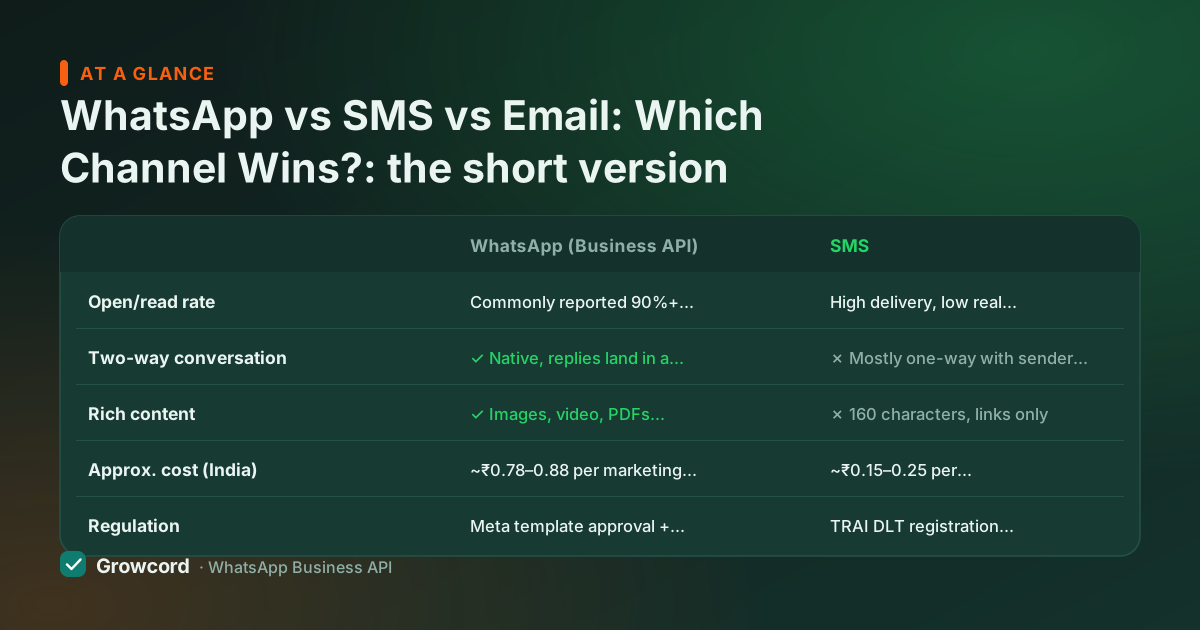
| WhatsApp (Business API) | SMS | ||
|---|---|---|---|
Open/read rate | Commonly reported 90%+, most within minutes | High delivery, low real attention beyond OTPs | Typically in the 20s for commercial lists |
Two-way conversation | ✓ Native, replies land in a team inbox | ✗ Mostly one-way with sender IDs | ✗ Replies rare in practice |
Rich content | ✓ Images, video, PDFs, buttons, catalogs | ✗ 160 characters, links only | ✓ Full HTML, but clipped and filtered |
Approx. cost (India) | ~₹0.78–0.88 per marketing conversation; utility ~₹0.12–0.13 | ~₹0.15–0.25 per promotional SMS via DLT routes | Fractions of a paisa per send at volume |
Regulation | Meta template approval + your opt-in list | TRAI DLT registration, templates, sender IDs | Spam filters and sender reputation |
Delivery/read reporting | ✓ Per message and per campaign | Delivery only | Opens increasingly unreliable |
Best at | Conversations, commerce, anything time-sensitive | OTP fallback, non-smartphone reach | Long-form content, receipts, B2B |
Engagement figures are industry-reported ranges, not guarantees, your list quality decides where you land. Costs are approximate Indian rates, checked August 2026.
What each channel is still the right tool for
This page isn't here to tell you email is dead, it isn't. Email remains unbeatable on cost per send, and it's the right home for newsletters people read at leisure, detailed receipts and invoices, and B2B threads where attachments and CCs matter.
SMS keeps two real jobs in India: OTP delivery as a fallback when other channels fail, and reaching the shrinking audience without reliable data or smartphones. If those are your use cases, keep them where they are.
WhatsApp earns the rest: anything a customer should see today, anything you want an answer to, and anything with money attached. Order updates, delivery alerts, abandoned-cart nudges, appointment and payment reminders, festival campaigns, support conversations. The pattern across Indian D2C brands and local businesses alike is the same, transactional and conversational traffic moves to WhatsApp first, campaigns follow once the opt-in list grows.
The cost comparison, done honestly
Per message, email wins and always will. But cost per read message, the number that actually matters for a campaign, flips the table. Pay roughly ₹0.80 for a WhatsApp marketing conversation that is very likely to be read within minutes, or a fraction of a paisa for an email that most recipients never open, and the arithmetic depends entirely on what a read is worth to you.
For a ₹2,000 average order value, one channel produces conversations with buyers; the other produces a report. Note also that a WhatsApp conversation covers a 24-hour window, not one message, a reminder plus the follow-up exchange costs one fee. The conversation pricing guide breaks the categories down.
One regulatory note Indian senders care about: promotional SMS requires TRAI DLT registration, headers, template registration, the lot. WhatsApp doesn't run through DLT; the gate is Meta's template approval plus genuine opt-in consent, managed from your platform dashboard.
Moving your mix toward WhatsApp, sensibly
Start with transactional messages
Order confirmations, delivery updates, reminders, utility conversations cost roughly ₹0.12–0.13 and replace the SMS traffic customers ignore anyway.
Build the opt-in list everywhere
Checkout checkboxes, QR codes at the counter, click-to-chat links on ads and the website. The list you build with permission is the one that keeps reading.
Run campaigns to segments, not blasts
Move your festival and offer campaigns over gradually, targeted by tags, repeat buyers first. Watch read and reply rates next to your email reports.
Keep email and SMS for what they do best
Newsletters and invoices stay on email; OTP fallback stays on SMS. Measure each channel on replies and revenue, not sends.
Running the WhatsApp side without the enterprise bill
Growcord is the WhatsApp half of that mix on the official Business API: broadcast campaigns with scheduling and per-campaign reports, auto-replies and no-code bots to catch the replies, a shared team inbox, and e-commerce automations wired to Shopify and WooCommerce.
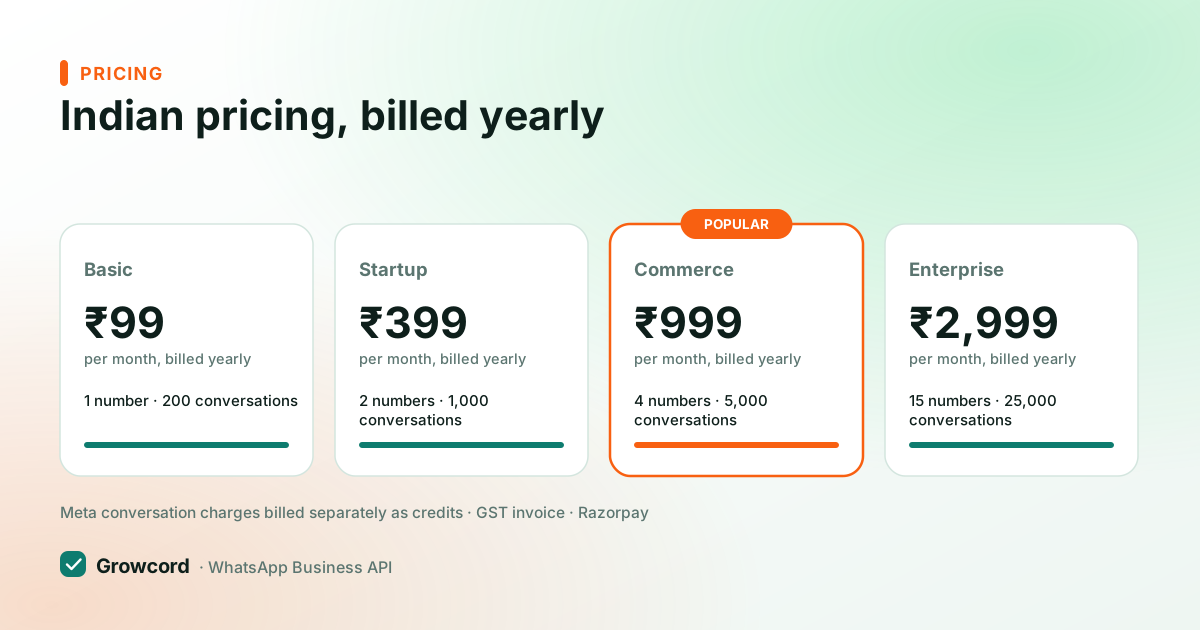
Plans start at ₹299/month, ₹99/month billed yearly, with Meta's conversation fees billed transparently as credits, and a free tier (1 number, 50 conversations a month) to test the read-rate claims on your own customers before moving any budget. The pricing page has every plan side by side.
Test the channel on your own list
Send your next 50 conversations free and compare the read rates against your last email campaign.
Start free, no card neededWhy Growcord
What you get here that you don't get elsewhere
Frequently asked questions
Is WhatsApp better than email for marketing?
For getting read and replied to, yes, WhatsApp read rates are commonly reported above 90% within minutes, against email opens typically in the twenties. Email is still far cheaper per send and better for newsletters, receipts and B2B threads. Most Indian businesses end up using both: WhatsApp for time-sensitive and conversational messages, email for long-form and records.
What are WhatsApp open rates compared to SMS and email?
Industry figures vary by list quality, but the pattern is consistent: WhatsApp read rates are commonly reported in the 90s with most reads inside a few minutes; email opens for commercial lists typically sit in the 20s; and SMS delivers almost universally but gets little real attention beyond OTPs. Measure your own list, the gap usually shows up in the first campaign.
Is WhatsApp marketing more expensive than SMS?
Per message, yes: a marketing conversation in India runs roughly ₹0.78–0.88 against ₹0.15–0.25 for a promotional SMS (checked August 2026). Per read message, WhatsApp is usually cheaper, because far more of what you pay for actually gets seen, and one WhatsApp fee covers a 24-hour conversation window, not a single text. Utility messages like order updates cost only about ₹0.12–0.13.
Should I stop sending SMS and email completely?
No. Keep SMS for OTP fallback and for customers without smartphones or reliable data, and keep email for newsletters, invoices and B2B communication. What most businesses migrate first is transactional traffic, order updates, reminders, followed by promotional campaigns as their opted-in WhatsApp list grows. Judge each channel on replies and revenue, not send counts.
Do TRAI DLT rules apply to WhatsApp marketing?
No, DLT registration governs SMS in India, not WhatsApp. WhatsApp's gate is different: business-initiated messages must use Meta-approved templates and go to customers who opted in, and blocks from unwilling recipients damage your number's quality rating. So there's less paperwork than SMS, but the consent requirement has real teeth.
Which channel is best for OTPs and alerts?
WhatsApp handles OTPs through authentication templates and alerts through utility templates at roughly ₹0.12–0.13 each, with delivery and read receipts. Most Indian businesses run WhatsApp as the primary route with SMS as automatic fallback for numbers that aren't on WhatsApp, you get the read rates without losing reach.
Why businesses pick Growcord
Official WhatsApp Business API
Built on Meta's Cloud API, the sanctioned channel, not a modded app. No number-ban roulette.
Indian pricing, GST invoice
Plans from ₹99/month billed yearly. Paid in ₹ via Razorpay, with a proper GST invoice every time.
Free tier, no card needed
1 number and 50 conversations a month to prove it on real customers before paying anything.
Support from New Delhi, in IST
A real team on email and WhatsApp, Monday to Saturday 10:00–19:00 IST, not a ticket void.
Talk to us
Get set up on WhatsApp this week
Tell us what you sell and how many customers you message. We'll reply on WhatsApp with the plan that fits and, if you want it, walk you through the Meta approval step.
- No sales call unless you ask for one
- Answers from the team that builds it, in IST hours
- Free tier available. You can start before you decide
Keep reading
Related guides and comparisons
Last updated: 2026-08-07