

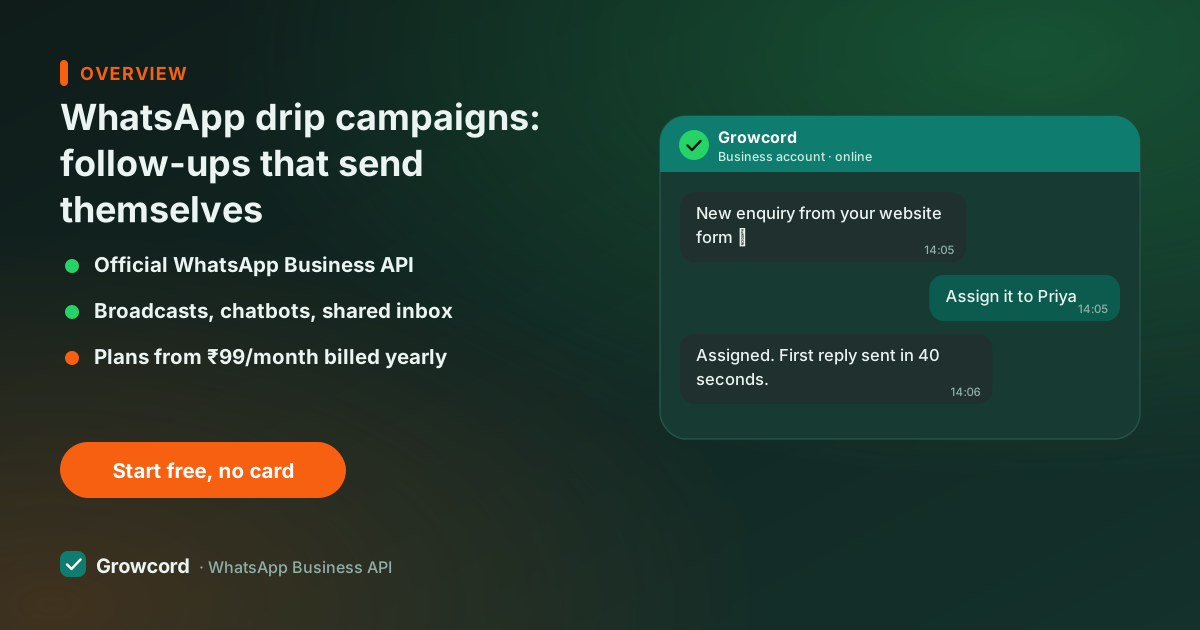
What automated WhatsApp sequences do that broadcasts can't
A broadcast is one message to many people at the same moment. A drip is many messages to one person, timed from *their* action: they enquired today, so the welcome goes now, the catalogue tomorrow, the offer on day five.
That difference is why drips convert, the message meets the customer where they are in their own timeline, not where your campaign calendar happens to be. And the follow-up actually happens. In a manual process, the second and third follow-ups are the first casualties of a busy week; in a sequence, day three arrives whether or not anyone remembered.
The other thing sequences buy you is restraint. Because each step is written once and reviewed calmly, the tone stays helpful instead of pushy, and the gaps between messages are deliberate. One good message every few days outperforms three anxious ones in an afternoon, and it's far kinder to the quality rating that governs your messaging limits.
How drips are built in Growcord
Three building blocks combine into any sequence you'd want. Scheduled campaigns send approved templates to a segment on the dates you choose, the simplest drip is three campaigns to the same tag, spaced a few days apart. Bot flows handle the triggered journeys: a new enquiry starts a flow that replies now and continues the conversation based on what the person taps. E-commerce triggers fire from store events, abandoned carts, orders, restocks, through the Shopify and WooCommerce integrations.
Replies at any step land in the shared inbox, where a person takes over. That last part is the point of the whole machine: the drip's job is to start a conversation, not to finish one.
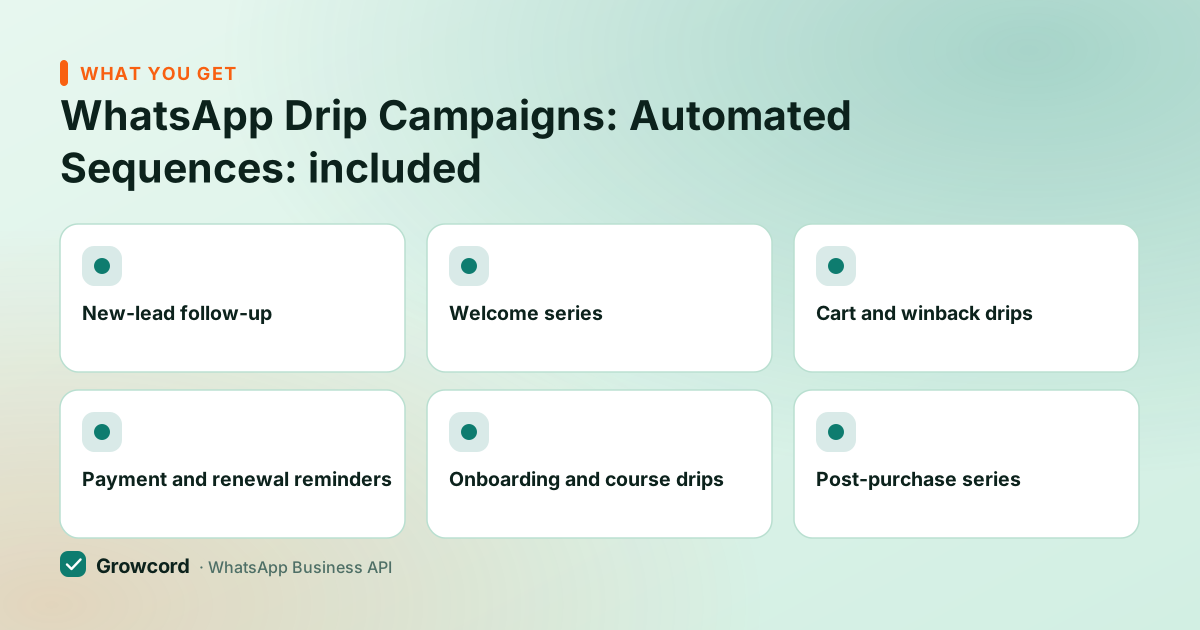
Six sequences worth building first
New-lead follow-up
Instant reply on day 0, a nudge on day 1, proof or a catalogue on day 3, a time-bound offer on day 7. Stops the moment they answer.
Welcome series
New subscribers get who-we-are, what-to-expect and a first offer across their first week, one message at a time.
Cart and winback drips
A reminder hours after an abandoned cart, a gentle follow-up the next day; lapsed customers get a we-miss-you sequence months later.
Payment and renewal reminders
EMI dues, fee instalments, membership renewals, a polite series that escalates from reminder to final notice on schedule.
Onboarding and course drips
Coaching institutes drip a lesson or practice question a day; product businesses drip setup tips after delivery.
Post-purchase series
Order confirmed, shipped, delivered, then a how-to on day 3 and a review request on day 7, while the experience is fresh.
Setting up a drip campaign
Map the journey on paper first
Who enters the sequence, what each step says, how many days apart, and what ends it, a reply, a purchase, or the last message.
Write the templates and get them approved
Each business-initiated step is a Meta-approved template with merge fields. Submit from inside Growcord; approval usually takes minutes to a few hours.
Set the audience, delays and exits
Point the sequence at a tag or trigger, space the steps, and route replies to the shared inbox so a person continues the thread.
Watch the reports and trim
Per-step delivery, read and reply counts show where the sequence works and where people drop. Cut the step nobody responds to.
The rules that keep drip marketing on WhatsApp safe
Drip marketing on WhatsApp lives inside Meta's rules, and they're workable once stated plainly. Messages you initiate outside the 24-hour customer window must be approved templates, which is most drip steps, so write them as templates from the start. The audience must have opted in; a sequence aimed at a purchased list is the fastest route to blocks and a frozen rating, as the safe bulk messaging page explains.
Every sequence needs an exit: an opt-out line in the messages, honoured immediately, and a stop-on-reply so a customer mid-conversation with your sales team isn't interrupted by day-5 marketing. Get those right and a drip reads like attentiveness; get them wrong and it reads like a machine, which by then it is.
What a WhatsApp follow-up series costs
Each business-initiated step is a marketing conversation, roughly ₹0.78–0.88 in India, billed in Growcord as credits at cost. A three-step sequence to 300 leads is about 900 conversations, in the region of ₹750–800, and the estimate shows before anything sends.
Platform side: campaigns start on Basic at ₹299/month (₹99/month billed yearly); scheduling, bot flows and analytics, the three pieces a sequence is assembled from, start on Startup at ₹799/month (₹399/month billed yearly). For comparison, Wati's Growth plan is listed at ₹2,499/month as of August 2026, roughly six times Startup's yearly rate for the same Meta fees underneath. The conversation pricing guide breaks down Meta's categories, and the pricing page has every plan.
Build your first sequence this week
Start free with 50 conversations a month, enough to run a three-step drip on a real segment and read the results.
Start free, no card neededWhy Growcord
What you get here that you don't get elsewhere
Frequently asked questions
What is a WhatsApp drip campaign?
It's an automated series of WhatsApp messages sent to one person over days or weeks, timed from their action, an enquiry, a signup, a purchase. Instead of one broadcast and silence, the customer gets a welcome now, a follow-up tomorrow and an offer on day five, with the sequence stopping when they reply or opt out.
How is a drip campaign different from a broadcast?
A broadcast sends one message to a whole list at the same moment; a drip sends a series to each person on their own timeline, triggered by what they did. Broadcasts suit announcements and offers; drips suit follow-up, nurture and onboarding, the places where timing relative to the customer matters more than the calendar.
Does the sequence stop when someone replies?
It should, and in a well-built Growcord setup it does: replies land in the shared inbox where a person or bot continues the conversation, and the contact exits the automated series. Nothing erodes trust faster than a customer who answered on day 2 still receiving the canned day-5 message.
How many messages should a WhatsApp drip have?
Three to five steps over one to two weeks covers most use cases, enough repetition to be remembered, not enough to be blocked. WhatsApp is a personal channel, so err shorter than you would on email, keep the gaps at two or more days, and end the sequence cleanly rather than looping forever.
Do drip messages need Meta template approval?
Yes, for any step your business initiates outside the 24-hour customer-service window, which is most drip steps. You write each message as a template with merge fields and submit it from inside Growcord; approval usually takes minutes to a few hours. Replies to a customer inside the 24-hour window are free-form.
What does a WhatsApp drip campaign cost?
Roughly ₹0.78–0.88 per marketing conversation in India per step, billed as credits at cost, plus the plan fee. A three-step drip to 300 leads is about 900 conversations, around ₹750–800. Scheduling and bot flows start on Growcord's Startup plan at ₹799/month, or ₹399/month billed yearly.
Why businesses pick Growcord
Official WhatsApp Business API
Built on Meta's Cloud API, the sanctioned channel, not a modded app. No number-ban roulette.
Indian pricing, GST invoice
Plans from ₹99/month billed yearly. Paid in ₹ via Razorpay, with a proper GST invoice every time.
Free tier, no card needed
1 number and 50 conversations a month to prove it on real customers before paying anything.
Support from New Delhi, in IST
A real team on email and WhatsApp, Monday to Saturday 10:00–19:00 IST, not a ticket void.
Talk to us
Get set up on WhatsApp this week
Tell us what you sell and how many customers you message. We'll reply on WhatsApp with the plan that fits and, if you want it, walk you through the Meta approval step.
- No sales call unless you ask for one
- Answers from the team that builds it, in IST hours
- Free tier available. You can start before you decide
Keep reading
Related guides and comparisons
Last updated: 2026-08-07