

Festival campaign ideas for WhatsApp
Festivals are when Indian customers expect brand messages, and when a good one stands out from the flood of generic "Happy Diwali" blasts.
- The Diwali countdown. Five days, one deal a day, each message revealing the next day's category. "Day 3 of 5: 30% off silver jewellery, today only. Tomorrow, something for your home." Countdown structure earns repeat opens because each message has news in it.
- Gift guides by budget, not by product. "Diwali gifts under ₹999", "for your team", "for in-laws". Segment-first framing does the shopper's thinking for them; send each guide to the tag it fits.
- Early access for repeat buyers. Open the sale to your best customers 24 hours before everyone else, and say so: "You've shopped with us thrice this year, so you shop the Diwali sale first." Recognition converts better than an extra 5% off.
- The jeweller's rate update. Jewellers and bullion dealers send the day's gold rate each morning through the season, pure utility that keeps the brand one tap away when the buying decision lands.
- Regional festivals in regional language. Onam, Pongal, Durga Puja, Gudi Padwa, segmented by city with copy in Malayalam, Tamil, Bengali or Marathi. A Kochi customer getting an Onam message in Malayalam reads it; a national blast gets ignored.
- The festive catalog drop. One message, your festive collection as a WhatsApp catalog, browse-and-buy inside the chat.
Campaign examples for the rest of the year
Festivals are eight weeks; these run all twelve months. The strongest performers are automations that react to what one customer just did, rather than broadcasts to everyone:
Always-on campaigns worth setting up once
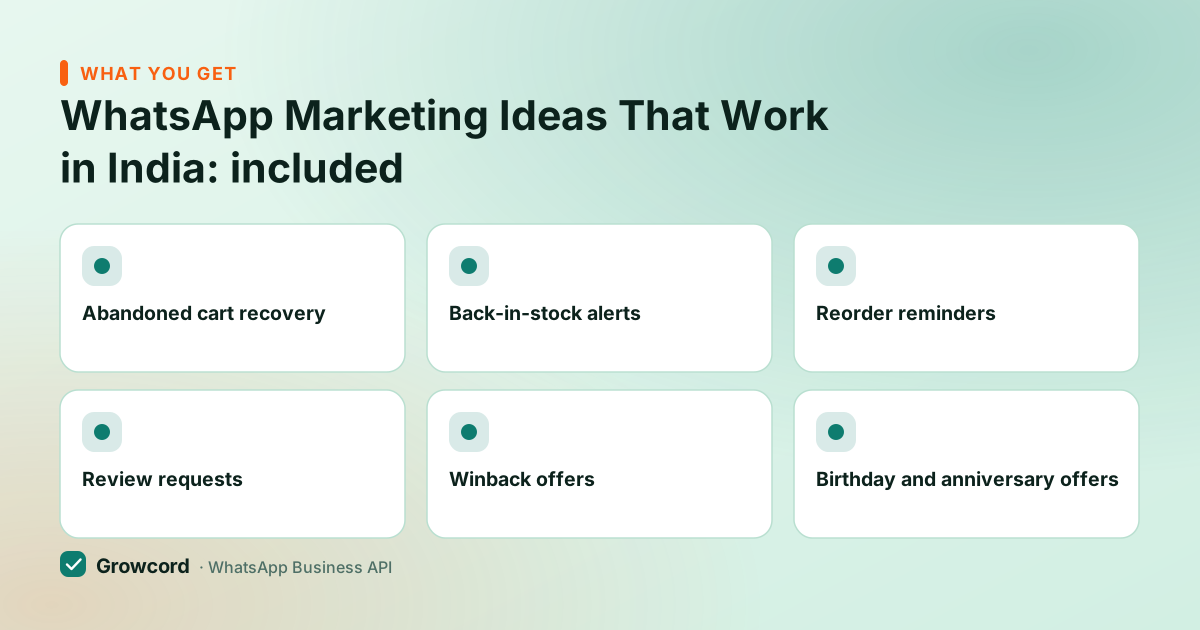
Abandoned cart recovery
"Your kurta set is still in the cart, and stock is down to 4." Sent an hour after abandonment, with a link straight back to checkout. The workhorse of D2C WhatsApp.
Back-in-stock alerts
Let customers tap 'Notify me' on sold-out items, then message exactly those people when stock lands. The most welcome marketing message there is.
Reorder reminders
For consumables, supplements, coffee, cosmetics, a nudge timed to when the last order should be running out. "Your protein usually lasts 30 days. Restock with one tap?"
Review requests
A few days after delivery: "How's the new grinder? A rating helps other buyers, takes 10 seconds." Replies also surface unhappy customers before they post publicly.
Winback offers
A segment of customers with no order in 90 days, and one honest message: "It's been a while, here's ₹150 off if you want to give us another go."
Birthday and anniversary offers
Collect the date at signup, automate a small voucher on the day. Low volume, high warmth, and it runs itself all year.
Promotion examples beyond discounts
Discounting is the least imaginative lever, and lists trained on discounts stop responding to anything else. Six ideas that build the relationship instead:
- A weekly newsletter with actual value. A salon sends one hair-care tip every Thursday; a coaching institute sends one solved problem. The WhatsApp newsletter format earns the right to sell occasionally because it gives more than it asks.
- New-arrival drops for the interested. Not the whole list, the tag that bought that category before. "You bought our linen shirts in May. The winter collection just landed."
- Button polls. "Which colour should we restock, Rust / Olive / Navy?" Replies cost the customer one tap, give you demand data, and every tap opens a fresh service window for free follow-up.
- The referral ask, placed well. Right after a 5-star review reply: "Glad you loved it! Know someone who would too? Share this link, you both get ₹100 off."
- Daily utility for your industry. A restaurant's lunch menu at 11 am, a tuition centre's seat availability for the new batch, a grocer's fresh-stock list. Utility messages make the marketing ones tolerable.
- Grow the list at every touchpoint. Click-to-WhatsApp ads on Facebook and Instagram, a QR code at the billing counter, a wa.me link on the website, each with a clear reason to say yes ("get the offer on WhatsApp").
Every idea above assumes one thing: consent. Marketing templates should only go to people who opted in. Skipping this isn't just a compliance issue, cold recipients block, blocks sink your quality rating, and a sunk rating caps your messaging limits. The opt-in guide shows collection formats that hold up.
Before you hit send, every time
The audience opted in, and you can show when and how
You're sending to a segment, not the whole list, relevance is the anti-block strategy
Marketing frequency stays modest, for most businesses, 2 to 4 promotional sends a month
The message leads with the reader's interest in line one, not your brand name
There's a working opt-out (a STOP keyword) and it's honoured instantly
You'll check read and reply rates before planning the next send
What these campaigns cost to run
Two components, both known before you send. Meta charges about ₹0.86 per delivered marketing template in India as of August 2026, so the 2,000-contact Diwali countdown at the top of this page costs roughly ₹1,730 in Meta fees for one send, the conversation pricing guide breaks the categories down.
Growcord passes that fee through at Meta's published rate with no markup and earns on the plan: Basic ₹299/month (₹99 billed yearly) with 200 conversations, Startup ₹799 (₹399) with 1,000 and the scheduling this page assumes, extra volume at ₹399 per 1,000. The pricing page has the rest, and subscriptions carry a 7-day money-back guarantee.
One caution on results. Nobody can tell you what these campaigns will convert at for your list, treat any provider quoting a conversion rate as marketing. What you can measure from week one is in the campaign report: delivered, read and replied, next to what the send cost in credits.
Run the winback to 200 lapsed buyers before you run it to 2,000, and let your own numbers decide. A list that trusts you is the asset; every campaign either builds it or spends it.
Run your first campaign this week
Free tier: 1 number, 50 conversations a month, enough to test a festival segment before committing to a plan.
Start free, no card neededWhy Growcord
What you get here that you don't get elsewhere
Frequently asked questions
What kind of marketing messages can I send on WhatsApp?
Any promotional content that goes to opted-in customers via approved marketing templates: offers, festival campaigns, new arrivals, restock alerts, winback discounts, newsletters and event invites. Templates support images, videos, PDFs and buttons. Meta reviews each template before it can be sent, and rejects formats that look like spam, clear, specific offers pass; vague blasts often don't.
How often should I send WhatsApp marketing messages?
For most businesses, 2 to 4 promotional sends a month per contact is a sensible ceiling, with automations like cart recovery running on top since they react to individual behaviour. WhatsApp is a personal channel, over-messaging shows up within days as blocks, which damage the quality rating that controls your sending limits. Frequency should feel like a considerate shopkeeper, not a hoarding.
Do I need permission to send marketing messages on WhatsApp?
Yes. Meta's policies require opt-in consent before you send marketing templates, and the mechanics enforce it indirectly, recipients who never agreed tend to block, blocks lower your quality rating, and a low rating cuts your messaging tier. Collect consent at checkout, through a keyword reply, a website form or a QR code, and keep a record of when each contact opted in.
Which festival campaigns work best on WhatsApp in India?
Segmented, specific ones: a Diwali countdown with a new deal daily, gift guides split by budget, early access for repeat buyers, and regional-festival messages in the regional language. These consistently outperform a single generic greeting blast because each message carries actual news for that reader. Timing matters too, festival shopping starts weeks early, so the first send should as well.
How much does a WhatsApp marketing campaign cost?
Meta charges per delivered marketing template, about ₹0.86 in India as of August 2026, so a 1,000-contact send costs roughly ₹860 in Meta fees, plus your platform plan (Growcord's Basic is ₹299/month, or ₹99/month billed yearly). Utility messages such as order updates cost about ₹0.115. The credit estimate appears before you confirm the send, so there are no surprises after.
Can I send offers to people who haven't saved my number?
Yes, on the WhatsApp Business API, messages reach every opted-in contact whether or not they saved you, which is a key difference from the Business app's broadcast lists. The requirement that matters is consent, not the address book. If they didn't opt in, don't send: it's against Meta policy and it's how quality ratings and messaging tiers get destroyed.
Why businesses pick Growcord
Official WhatsApp Business API
Built on Meta's Cloud API, the sanctioned channel, not a modded app. No number-ban roulette.
Indian pricing, GST invoice
Plans from ₹99/month billed yearly. Paid in ₹ via Razorpay, with a proper GST invoice every time.
Free tier, no card needed
1 number and 50 conversations a month to prove it on real customers before paying anything.
Support from New Delhi, in IST
A real team on email and WhatsApp, Monday to Saturday 10:00–19:00 IST, not a ticket void.
Talk to us
Get set up on WhatsApp this week
Tell us what you sell and how many customers you message. We'll reply on WhatsApp with the plan that fits and, if you want it, walk you through the Meta approval step.
- No sales call unless you ask for one
- Answers from the team that builds it, in IST hours
- Free tier available. You can start before you decide
Keep reading
Related guides and comparisons
Last updated: 2026-08-07