

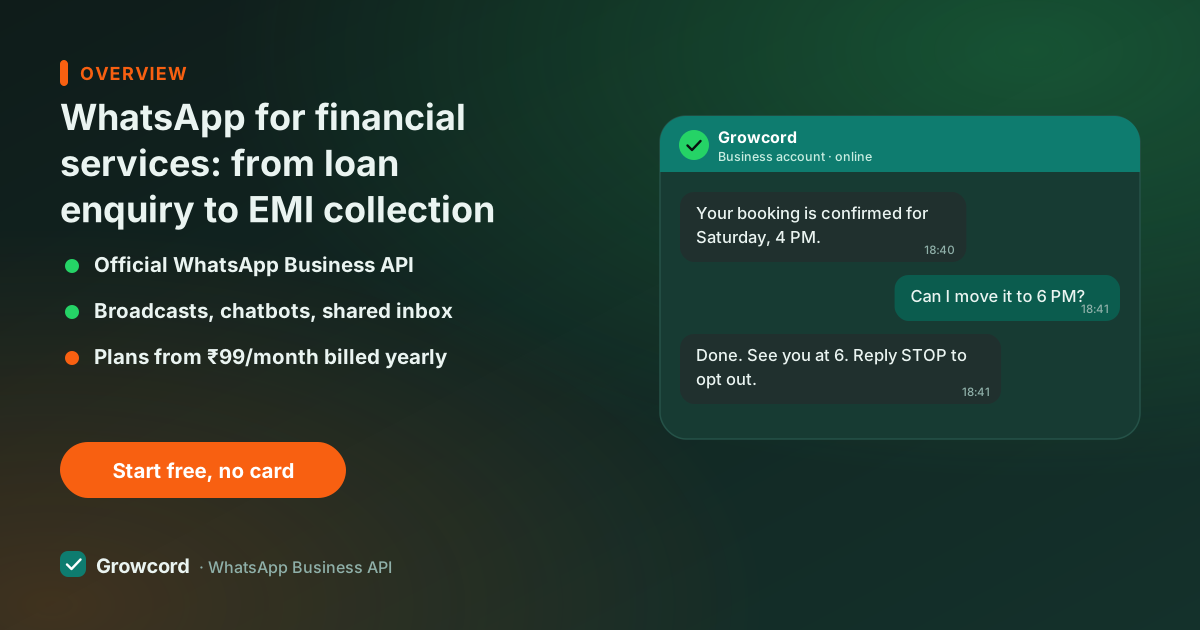
Where WhatsApp fits in a lending business
Follow one loan through its life and you'll find a WhatsApp use case at every stage. A prospect fills a loan enquiry form or clicks an ad, the first response decides whether they talk to you or the next lender, and an instant WhatsApp reply beats a callback queue every time.
During processing, files stall because one document is missing; a polite nudge with the exact list of pending documents restarts them. After disbursal, the relationship becomes reminders: EMI due dates, payment confirmations, NOC and statement requests.
Phone calls handle all of this today, expensively. A telecaller works through a few dozen numbers an hour, plenty of borrowers don't answer an unknown caller, and nothing that was said exists in writing. SMS is cheap but can't be replied to.
WhatsApp is automated like SMS and two-way like a call: the customer answers "I get salary on the 7th, will pay then", and a human picks up that thread in the shared inbox with the whole history attached.
KYC follow-up that actually completes
Incomplete KYC is where lending funnels quietly die. The applicant intended to send the bank statement, then life happened. A WhatsApp follow-up works because replying takes seconds: the message lists exactly what's pending, and the customer photographs the document and sends it in the same chat.
Growcord's inbox keeps every received file attached to the contact, so your ops team sees the full trail, and a drip sequence can space the nudges over days automatically instead of depending on a caller's memory.
EMI collection messages that stay polite and effective
Collections on WhatsApp is mostly about timing and tone. A sequence that works for many lenders: a friendly reminder 3 days before the due date with the amount and a payment link, a due-today message on the morning of, and a short overdue follow-up after.
Because every message is a pre-approved template, tone stays consistent no matter which team member triggers it, no improvised threats, which matters for both your brand and RBI's fair-practices expectations. Payments come back faster when paying is one tap: put a UPI or payment-gateway link in the button. The pattern is close to what we describe in payment reminders on WhatsApp.
What financial services teams run on Growcord
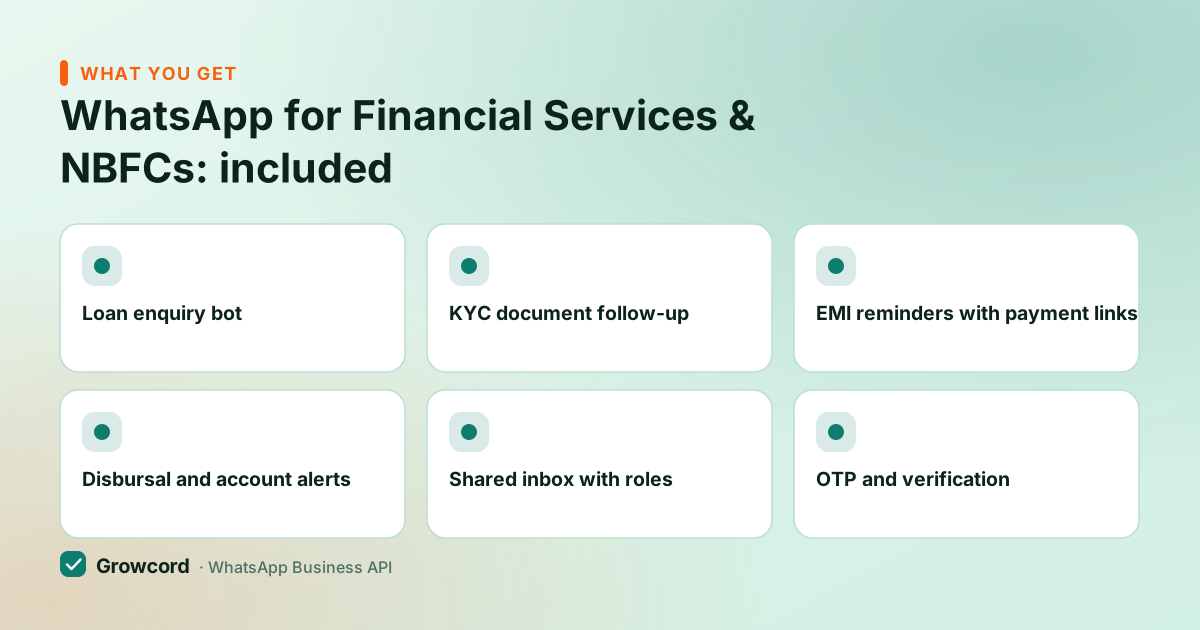
Loan enquiry bot
A no-code flow qualifies enquiries 24×7, loan type, amount, city, income bracket, and hands hot leads to your sales team.
KYC document follow-up
Automated nudges list exactly which documents are pending; customers reply with photos in the same chat.
EMI reminders with payment links
Scheduled reminders before and on the due date, with the amount merged in and a pay-now button.
Disbursal and account alerts
Approval, disbursal, payment-received and statement messages fire from your LOS/LMS through the API.
Shared inbox with roles
Sales, ops and collections work the same number with assignment and history, no customer chats on personal phones.
OTP and verification
Send login and transaction OTPs as authentication templates, delivery you can see, on a channel customers open.
Three messages to write first
EMI reminder (utility). "Hello Prakash, a reminder that your EMI of ₹8,540 for loan LN-20417 is due on 10 August. Pay in one tap: [payment link]. Already paid? Please ignore this message. Sunrise Finserv."
KYC pending (utility). "Hi Farhan, your personal loan application AP-9921 is on hold because two documents are pending: (1) last 3 months' bank statement, (2) address proof. Reply with photos or PDFs here and we'll continue processing the same day."
Loan enquiry response (service window). When a prospect messages first, you have a 24-hour window to reply freely, no template needed. A good first reply: "Thanks for your interest in a business loan! To share the right offer, could you tell us your monthly turnover and city? Typical approvals take 48 hours once documents are in." The 24-hour window guide explains how the window works.
Note what these templates avoid: full account numbers, balances or anything sensitive beyond what the reminder needs. Keep detailed statements behind a login link.
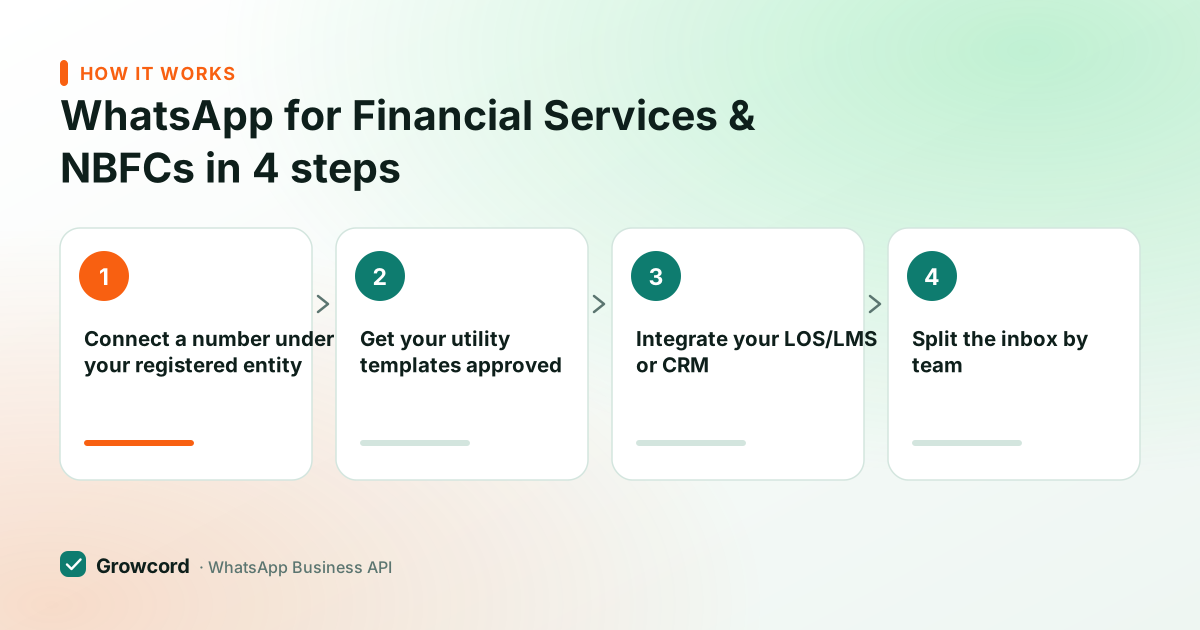
Getting an NBFC or fintech live
Connect a number under your registered entity
The Meta business verification uses your company's legal identity, the same one on your lending licence, which is what makes the verified business name appear in chats.
Get your utility templates approved
Submit EMI reminder, KYC follow-up and disbursal templates from Growcord. Utility templates with clear transactional purpose usually clear review quickly.
Integrate your LOS/LMS or CRM
Trigger messages from your loan system via the REST API, or start manually with CSV imports, tags and scheduled campaigns while IT catches up.
Split the inbox by team
Route enquiry replies to sales, document uploads to ops and payment conversations to collections, with the bot fielding repeat questions first.
Cost, consent and compliance
Two cost lines. Growcord's plan fee: from ₹299/month (₹99/month billed yearly) on Basic, with Startup at ₹799/month (₹399 yearly) fitting most single-branch lenders and DSAs; extra team seats are ₹149/month. Meta then charges per 24-hour conversation, billed to you as credits at Meta's published rate with no markup, reminders and alerts are utility conversations at roughly ₹0.12 in India, far below marketing rates.
A 5,000-customer EMI reminder run therefore costs around ₹600 in Meta fees. Subscriptions carry a 7-day unconditional money-back guarantee, so a pilot bucket costs you nothing to abandon. The pricing page lays out every plan.
On consent: message customers who agreed to WhatsApp communication, a checkbox in the loan application or onboarding journey is the clean way to collect it, and the opt-in guide shows formats that hold up. Send within sensible hours, honour STOP requests (Growcord can auto-tag opt-outs), and keep collections language factual. WhatsApp's quality rating punishes numbers that customers block, so restraint is enforced by the platform as much as by policy.
Move your loan journey onto WhatsApp
Free tier: 1 number and 50 conversations a month, enough to pilot EMI reminders on one bucket before a full rollout.
Start free, no card neededWhy Growcord
What you get here that you don't get elsewhere
Frequently asked questions
Can NBFCs send EMI reminders on WhatsApp?
Yes. EMI reminders are utility templates, transactional messages tied to an existing loan, and Meta approves them routinely. You need the customer's opt-in, which most lenders collect during onboarding. Reminders go out on schedule with the amount and due date merged per customer, and a payment link button so the customer can pay from the chat.
Is it safe to collect KYC documents over WhatsApp?
WhatsApp chats are end-to-end encrypted in transit, and in Growcord received documents attach to the contact record your team accesses with role-based logins. Treat it as a collection channel, not a system of record: pull documents into your own KYC storage, and avoid sending sensitive data outward, share statements behind a login link instead.
What does sending 10,000 EMI reminders cost?
Utility conversations in India currently run around ₹0.12, so roughly ₹1,200 in Meta fees for 10,000 reminders, plus your Growcord plan (from ₹299/month, or ₹99/month billed yearly). That's usually far below what one day of telecalling the same list costs, and every message is delivered in writing with a read receipt.
Can we trigger messages from our loan management system?
Yes. Growcord's REST API lets your LOS/LMS send an approved template on any event, approval, disbursal, due date, payment received, with per-customer fields merged in. Webhooks push replies and delivery statuses back. If your system connects to Zapier, you can wire it without writing code.
Do borrowers have to opt in before we can message them?
Yes, WhatsApp's rules require opt-in before business-initiated messages, separate from any TRAI/DND status. Add a WhatsApp-consent checkbox to your application form and onboarding journey. Once a customer messages you first, you can also reply freely for 24 hours without a template under the service window.
What happens if a customer blocks the number?
Blocks feed into your number's quality rating; too many and Meta can freeze or lower your messaging tier. In practice this keeps lenders honest: send relevant, correctly-timed reminders to opted-in customers and blocks stay rare. Growcord surfaces the quality rating in the dashboard so you see trouble before it bites.
Why businesses pick Growcord
Official WhatsApp Business API
Built on Meta's Cloud API, the sanctioned channel, not a modded app. No number-ban roulette.
Indian pricing, GST invoice
Plans from ₹99/month billed yearly. Paid in ₹ via Razorpay, with a proper GST invoice every time.
Free tier, no card needed
1 number and 50 conversations a month to prove it on real customers before paying anything.
Support from New Delhi, in IST
A real team on email and WhatsApp, Monday to Saturday 10:00–19:00 IST, not a ticket void.
Talk to us
Get set up on WhatsApp this week
Tell us what you sell and how many customers you message. We'll reply on WhatsApp with the plan that fits and, if you want it, walk you through the Meta approval step.
- No sales call unless you ask for one
- Answers from the team that builds it, in IST hours
- Free tier available. You can start before you decide
Documentation and official resources
Keep reading
Related guides and comparisons
Last updated: 2026-08-07