

Your WhatsApp lead pipeline is currently a scroll of chats
In most Indian businesses, the sale actually happens inside WhatsApp threads, the enquiry, the photos, the price negotiation, the "confirm by tomorrow". Which means the sales pipeline already exists; it's just stored as a scroll of 60 open chats in somebody's phone, sorted by whoever messaged last instead of by who's closest to paying.
That sorting is the killer. The lead who said "call me after the 15th" sinks below forty newer chats and never resurfaces. The customer who asked for a revised quote gets it three days late because the reminder lived in someone's head. Nobody can answer the Monday-meeting question, how many deals are open, and where are they stuck? without scrolling and guessing.
The traditional fix, a separate CRM, usually fails for a human reason: salespeople live in WhatsApp and won't re-type every conversation into a second system. The CRM goes stale in a fortnight, and everyone quietly returns to the scroll.
A sales CRM on WhatsApp, not next to it
The fix that sticks is removing the copy step entirely. In Growcord, every inbound chat automatically becomes a contact, and the pipeline is a view over those contacts, so updating a deal means clicking a stage while you're already in the conversation. There is no second system to keep honest.
Because pipeline and shared team inbox share one dashboard, the context never separates from the deal: open a lead from the pipeline and the entire WhatsApp history is right there, what they asked, what was quoted, what was promised.
Tags carry the details that stages don't ("Instagram lead", "budget under 20k", "Andheri"), and those same tags become segments you can message later. If you're weighing this against a full CRM, the WhatsApp CRM page covers the broader picture.
What's in a Growcord pipeline
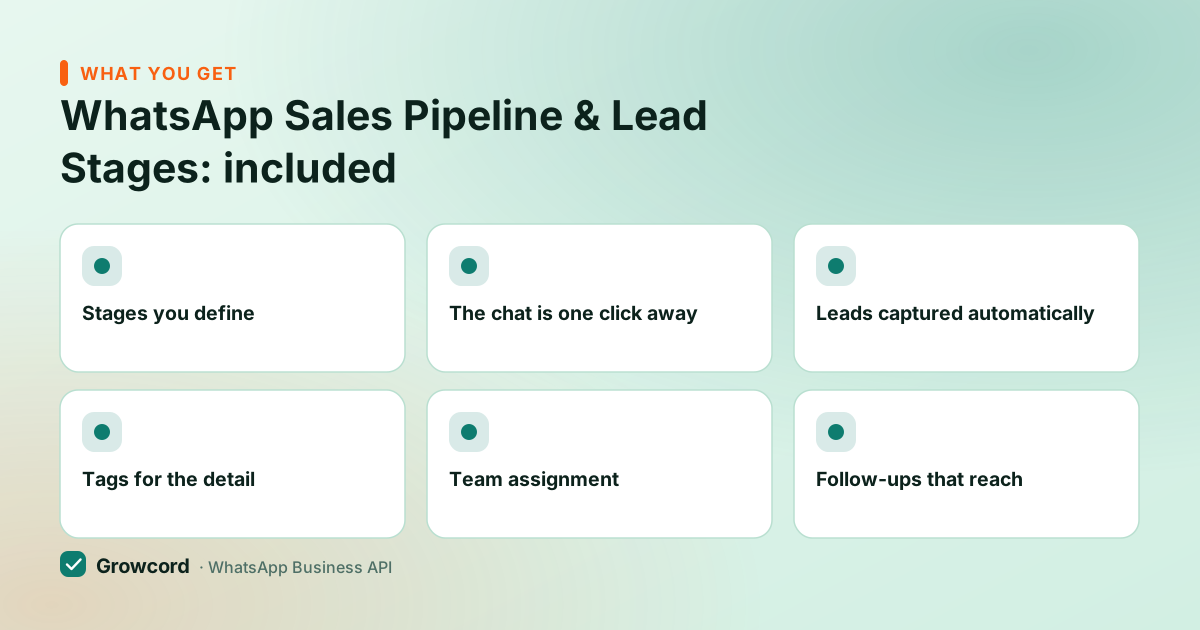
Stages you define
Name the stages after your real process, site visit booked, trial class done, quote sent, not someone else's sales theory.
The chat is one click away
A pipeline entry is the contact, with the full WhatsApp conversation behind it. No switching apps to see what was said.
Leads captured automatically
A new inbound chat becomes a contact by itself, from a click-to-chat link, an ad or a QR code. Nothing to re-type.
Tags for the detail
Source, budget, city, product interest, tag it once, filter the pipeline by it, and reuse the tag as a campaign segment.
Team assignment
Give each salesperson their leads. Roles keep the whole team in one dashboard without everyone editing everything.
Follow-ups that reach
Leads who've gone quiet past the 24-hour window get an approved template message, a real follow-up, not a chat that never delivers.
From enquiry to closed, in Growcord
The lead messages in
From an ad, a wa.me link on your site or a QR at the counter. The contact is created automatically and an auto reply acknowledges within seconds.
Qualify in the inbox
Ask the qualifying questions yourself, or let a bot flow collect budget and requirement first. Tag what you learn.
Move the stage as the deal moves
Quote sent? Update the stage from the same screen you sent the quote from. The pipeline stays truthful because updating it costs nothing.
Follow up on time
Inside the 24-hour window, just reply. Outside it, send an approved template, the polite nudge that revives most stalled deals.
Close, and learn
Mark the deal won or lost. Lost leads aren't dead, tag them and run a winback campaign next season.
WhatsApp lead stages that actually get updated
The pipelines that survive contact with a real sales team share three habits:
- Few stages. Four to six. "New enquiry → Qualified → Quote sent → Follow-up due → Won/Lost" beats a ten-column masterpiece nobody maintains.
- Stages are facts, not feelings. "Quote sent" is verifiable; "interested" is a mood. If two salespeople could disagree about which stage a lead belongs in, rename the stage.
- The pipeline is the meeting. Run the weekly sales review from the pipeline screen, count what's sitting in each stage, ask about anything stuck for a week. When the meeting reads from it, the team keeps it current.
Stage answers "how far along?"; tags answer "what kind?". Keep them separate and both stay useful. You can filter the quote-sent stage by "budget above 50k" when deciding who gets the personal call, and later send the whole "lost, price" tag a festival-offer campaign through WhatsApp campaigns.
What a WhatsApp pipeline costs
Pipelines are part of the Growcord platform, not a paid add-on module. Plans start at ₹299/month (₹99/month billed yearly); a growing sales team fits the Startup plan at ₹799/month (₹399 yearly), and extra team members are ₹149/month each. Meta's per-conversation fees apply to the messages themselves and are billed as credits at Meta's published rate with zero markup.
The pricing page has every plan side by side; the free tier, 1 number, 50 conversations a month, is enough to run a real pipeline for a small lead flow before paying anything, and paid subscriptions carry a 7-day unconditional money-back guarantee.
Industries where the whole sale is chat-shaped get the most out of this, real estate teams tracking site visits are the textbook case, but the same mechanics fit coaching admissions, jewellery orders and B2B quotes.
Put your open deals where you can see them
Start on the free tier, define your stages in ten minutes, and run next Monday's sales meeting from the pipeline screen.
Start free, no card neededWhy Growcord
What you get here that you don't get elsewhere
Frequently asked questions
Can I use WhatsApp as a sales CRM?
Yes, on the WhatsApp Business API. A platform like Growcord turns chats into contacts automatically and adds pipeline stages, tags, team assignment and follow-up campaigns on top, the core of a sales CRM, living inside the same dashboard where the conversations happen. The free Business app can't do this; it has no stages, no shared access and no automation.
How do leads get into the pipeline?
Mostly by messaging you: every new inbound WhatsApp chat becomes a contact automatically, whether it came from a click-to-chat link, a Facebook or Instagram ad, or a QR code. You can also import existing leads from a CSV and tag them by source, so the pipeline starts with your current book, not an empty screen.
Can my sales team of four work the same pipeline?
Yes. Growcord's shared inbox and pipeline are multi-user by design, assign leads to specific salespeople, use roles to control who edits what, and see the whole team's deals in one view. Plans include a set number of team members, and additional seats are ₹149/month each.
What stages should a WhatsApp sales pipeline have?
Start with four to six fact-based stages, for example: New enquiry → Qualified → Quote sent → Follow-up due → Won/Lost. Every stage should describe something that verifiably happened, not a feeling. Add a stage only when the team keeps asking a question the current stages can't answer, and put details like budget or city in tags, not extra stages.
What happens when a lead stops replying?
After 24 hours of silence, WhatsApp's session window closes and free-form messages can no longer be sent, the follow-up has to be an approved template message. That's healthy: it forces a deliberate, well-written nudge instead of a fifth "any update?". Leads that still don't respond get tagged and revisited with a winback campaign later.
Do I still need Zoho or Salesforce alongside this?
Depends on scale. For teams whose deals live mainly in WhatsApp, Growcord's pipeline, inbox and tags cover the job on their own. Businesses with a larger sales operation keep their main CRM and sync WhatsApp leads into it through Growcord's Zapier and webhook integrations, so the two systems stay consistent without manual entry.
Why businesses pick Growcord
Official WhatsApp Business API
Built on Meta's Cloud API, the sanctioned channel, not a modded app. No number-ban roulette.
Indian pricing, GST invoice
Plans from ₹99/month billed yearly. Paid in ₹ via Razorpay, with a proper GST invoice every time.
Free tier, no card needed
1 number and 50 conversations a month to prove it on real customers before paying anything.
Support from New Delhi, in IST
A real team on email and WhatsApp, Monday to Saturday 10:00–19:00 IST, not a ticket void.
Talk to us
Get set up on WhatsApp this week
Tell us what you sell and how many customers you message. We'll reply on WhatsApp with the plan that fits and, if you want it, walk you through the Meta approval step.
- No sales call unless you ask for one
- Answers from the team that builds it, in IST hours
- Free tier available. You can start before you decide
Keep reading
Related guides and comparisons
Last updated: 2026-08-07